Understanding the 2024 Daily Productivity Planner KDP as a Practical Print-Ready Asset
For those building a catalog on Amazon KDP, the search for well-structured, instantly usable interiors often leads to a product like the 2024 Daily Productivity Planner KDP. It arrives as a bundle of files designed to eliminate the technical guesswork of creating a daily planner from scratch. Instead of wrestling with margins, bleed settings, and page numbering, you get a tested package centered on a focused daily productivity layout, a 2024 calendar overview, and a welcoming first impression. The conversation around this planner is less about flashy promises and more about execution: is the layout genuinely useful, does it hold up under daily writing, and how well does it adapt to different audiences? This article breaks down its components, examines its structural choices, and explores where it fits into a content creator’s toolkit, all while sticking to real-world observations rather than superficial praise.
What Actually Ships Inside the Package
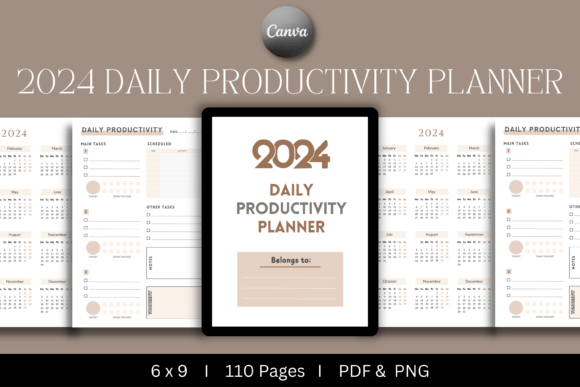
Peeling back the product listing, the core offering is a 110-page interior formatted at 6×9 inches with no bleed. That size sits comfortably in the hand and mirrors many popular trade paperbacks, making it familiar to end users. The package includes a ready-to-upload PDF that has been tested on Amazon KDP, a separate PNG file for quick previews, and two editable source files: a PowerPoint version and a Canva template link that requires a Pro account. This combination speaks to both immediate publishing—just upload the PDF—and deeper customization for those who want to tweak fonts, swap cover-related elements, or add a personalized touch before releasing under their own brand.
The 110-page count is worth noting immediately. In a daily planner context, 110 pages translates to roughly three and a half months of use if each day occupies a single page. This isn’t a 365-day brick; it’s a compact, sprint-length productivity tool. The decision to offer a tighter page range can be a deliberate design choice. It prevents the overwhelm of an endless year-long book and encourages users to focus intensely on a short-term goal, a seasonal project, or a quarterly business push. Whether that serves your specific audience is a question we’ll examine later, but the structural clarity of the file set is what makes the 2024 Daily Productivity Planner KDP a reliable asset for a KDP publisher who values low-friction uploads.
Layout Design and Everyday Usability
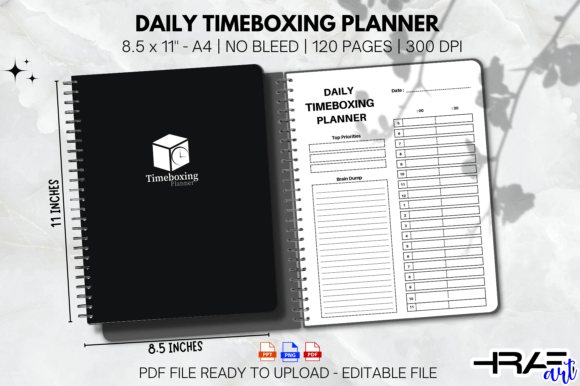
The interior centers on a daily page structure that prioritizes clarity over complexity. Based on similar tested interiors, you can expect sections for top priorities, a timed schedule or hourly breakdown, a task list, and a space for daily reflection or notes. The risk with many productivity planners is over-designing—adding so many boxes, trackers, and prompts that the page becomes cluttered and intimidating. Here, the 100% original premium interior claim suggests a clean, balanced aesthetic. The no-bleed format reinforces this, ensuring that no critical content is lost in the spine or trimmed margins during printing.
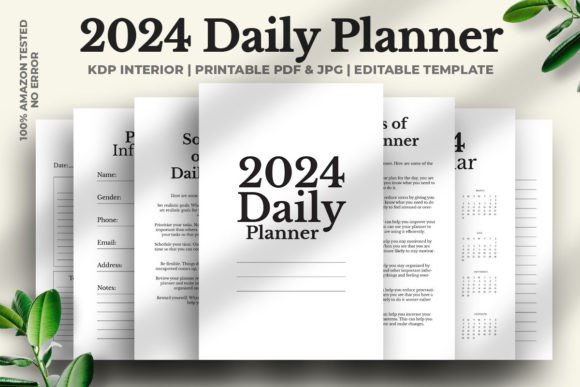
From a practical standpoint, the daily layout’s success hinges on how well it guides a user without dictating their style. For a freelance writer managing three client deadlines, the top priorities box acts as a quick morning anchor. For a student juggling assignments and side projects, the task list with checkable circles reduces cognitive load. The calendar overview included at the front gives a macro view of the year, useful for plotting deadlines or noting key dates before diving into daily granularity. A welcome page rounds out the opening, offering a gentle onboarding that many low-content books lack. Together, these elements form a coherent planning flow that feels intentional rather than slapped together.
Flexibility Through Editable Templates
Where this product separates itself from a static PDF download is the inclusion of editable formats. The PowerPoint file is the most universally accessible route. Even users without advanced design software can open it, adjust text styles, or reorder pages if they prefer a different daily arrangement. The Canva template link, while locked behind a Pro account requirement, opens up a more visual editing environment. With Pro, you can leverage Canva’s extensive font library, add brand colors, or integrate subtle branding elements before exporting a fresh PDF. This flexibility means the 2024 Daily Productivity Planner KDP can be rebranded for a coaching business, a niche productivity blog, or a motivational Etsy shop without starting from scratch.
However, the Canva Pro dependency is a genuine limitation. Not every KDP publisher maintains a Pro subscription, and the cost may not be justified for a single planner edit. The PowerPoint file mitigates that somewhat, but its layout possibilities are more constrained. If your customization needs are light—changing a font or adding a logo—PowerPoint handles it adequately. For deeper aesthetic overhauls, the Canva path is superior, though it adds a recurring expense. This trade-off is important to weigh against the upfront cost of the product itself.
Who Benefits Most From This Planner Interior
The audience alignment matters more than the product’s features on paper. The 2024 Daily Productivity Planner KDP fits neatly into several practical scenarios. For a small business owner launching a new product line in the first quarter, a 110-day planner acts as a focused campaign journal. The compact timeframe aligns with a sprint mentality—plan the launch, track daily actions, and review progress within a defined window. Entrepreneurs in the coaching or consulting space might repurpose the editable files to create a branded accountability planner for group programs, using the Canva template to match their visual identity.
Educators and students represent another clear lane. A semester typically spans 15 to 18 weeks, fitting perfectly within a 110-day structure. The clean daily pages eliminate the noise of irrelevant sections like year-long goal trackers found in bulkier planners. Freelancers and remote workers who operate in project cycles rather than rigid annual calendars will appreciate the shorter commitment. There’s also a niche for gift publishers: a quarterly productivity journal with a motivational cover uploaded as a standalone offer can perform well during New Year, back-to-school, or mid-year reset seasons.
One group that may find the format less suitable is the traditional year-long planner loyalist. If your audience expects a full twelve months of daily pages, this product alone won’t fulfill that promise. You could, of course, duplicate pages to extend it, but that manual intervention partially undermines the ready-to-upload value proposition. Recognizing this limitation saves downstream disappointment and returns.
Print Quality, Consistency, and KDP Readiness
The words “KDP Tested” and “ready to upload PDF” carry weight because anyone who has navigated Amazon’s print approval process knows the frustration of unexplained rejections. This product claims to have cleared those hurdles, suggesting the interior meets trim size, margin, and formatting standards. The 6×9 no-bleed configuration is a conservative, widely accepted choice that reduces the chance of content being cut off. From a production standpoint, the consistency of a pre-tested file is a time-saving asset.
The overall presentation hinges on the designer’s attention to typography, spacing, and alignment. While we can’t preview every file in real time, the emphasis on original premium quality points to a layout that uses fonts with commercial licenses, appropriate leading, and balanced white space. These details matter once a customer starts writing in the book. If the line spacing is too tight or the priority box is cramped, daily use becomes a chore. A well-designed page with generous writing room increases the perceived value and reduces returns. In this respect, the 2024 Daily Productivity Planner KDP positions itself as a workmanlike solution that prioritizes functional aesthetics over decorative excess.
Real-World Observations and Potential Drawbacks
Stepping back from the asset’s strengths, a few pragmatic observations surface. The 110-page count, while useful for sprint-based planning, can confuse buyers who see “2024 Daily Productivity Planner” and assume it covers the entire year. If you publish this planner as-is on KDP with a title implying a full year, you risk mismatched expectations. The solution is in the book description or subtitle—clearly stating it is a 110-day or quarterly planner aligns customer anticipation with the actual content. From a publishing strategy perspective, you might even lean into the quarterly angle deliberately, creating a series of four planners that span the year, each with a seasonal theme.
On the technical side, the Canva Pro requirement is a genuine friction point for those who prefer an all-in-one, one-time purchase workflow. It’s not a dealbreaker because the PowerPoint file exists, but it does segment the user base. Additionally, while the interior is print-tested, the weight of the paper and final physical feel are outside the digital product’s control. The resulting printed book’s tactile experience will vary based on the printing partner’s stock and binding quality, which is true for all KDP interiors. No digital interior can guarantee perfect tactile results, but a well-prepared file significantly increases the odds.
Long-Term Value Beyond a Single Upload
An often overlooked advantage of editable planner templates is their reuse potential. Once you own the 2024 Daily Productivity Planner KDP, the core structure can be adapted for different years, themes, or niche audiences. Adjust the calendar dates, swap the cover design, and you have a fresh product for 2025 without purchasing another interior. The PowerPoint file, in particular, allows for straightforward year updates. For a KDP entrepreneur scaling a planner brand, this modular approach reduces the cost per publication over time. The consistent 6×9 format also makes it easy to pair with matching notebooks, journals, or logbooks, creating a cohesive product line that shares a unified design language.
From an educational publisher’s angle, stripping out the 2024 calendar and repurposing the daily layout for a student study planner requires minimal effort. The layout’s emphasis on priorities and tasks translates well across uses. This adaptability increases the asset’s life far beyond a single calendar year. Treating it as a structural foundation rather than a one-off interior is where the long-term value truly lies.
Making an Informed Publishing Decision
Ultimately, the 2024 Daily Productivity Planner KDP presents itself as a pragmatic tool for creators who value speed, tested consistency, and moderate customization. It doesn’t try to be everything—you won’t find elaborate habit trackers, meal planning sections, or 500-page heft. Instead, it delivers a clean daily framework wrapped in a validated package that minimizes technical obstacles. The real differentiators are the editable source files and the no-bleed KDP-friendly architecture. If your audience segments appreciate focused, short-term planning tools or you’re building a series of quarterly productivity journals, this interior slots in without demanding a steep learning curve.
Like any resource, its usefulness scales with how well you match it to your target reader. A freelancer who resets goals every 90 days will see immediate value; a buyer looking for a complete year-long diary will need a different solution. The fact that this planner requires no bleed adjustments and arrives with a pre-tested PDF removes significant friction for those new to low-content publishing, while the template flexibility gives experienced publishers room to iterate. In a marketplace crowded with generic interiors, a product that balances structural clarity with respectful constraints earns its place as a dependable starting line rather than a finishing touch.