The Understated Power of a Pastel Daily Planner: Why Soft Hues Are Reshaping Daily Schedules
We often reach for the loudest tools when life feels chaotic—brightly colored apps, aggressive reminders, or hyper-structured systems that promise to discipline our time. Yet a quiet shift is taking place in how people manage their days. The pastel daily planner has moved from a niche aesthetic preference into a genuinely effective framework for focus, creativity, and emotional calm. Far more than a pretty cover, a thoughtfully designed pastel daily schedule merges psychology, design, and practical habit-building in a way that feels less like a chore and more like a moment of self-respect.
At its core, a pastel daily planner is a physical or printable template that uses soft, muted tones—lavender, sage, blush, buttercream, powder blue—to structure a day’s tasks, appointments, and reflections. Unlike stark white pages with black lines that can evoke performance anxiety, pastel layouts reduce visual tension. The color palette itself signals to the brain that this is a gentle space, not a battleground. This is not a trivial detail. Researchers in environmental psychology have long noted that low-saturation colors can lower cortisol levels and improve concentration. When applied to a daily schedule, the effect is a subtle permission to approach the day with clarity rather than noise.
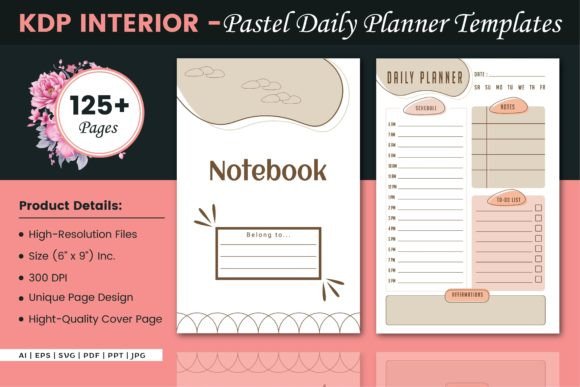
But what makes a pastel daily planner template truly valuable in 2025 is its versatility across both analog and digital workflows. Many users now seek editable daily schedule templates that they can print at home, upload to a tablet, or publish as part of a product line. The availability of professional templates—such as the Pastel Daily Planner, Daily Schedule Templates – KDP Interior—has lowered the barrier for creators, coaches, and small business owners who want to offer high-quality planners without starting from scratch. A pack that includes 100 ready-to-upload interiors for Amazon KDP, along with fully editable source files in AI, EPS, SVG, PDF, PPT, and JPG formats, gives users complete control over branding, customization, and output. That flexibility mirrors the way modern professionals think about their own planning: adaptable, personal, and never one-size-fits-all.
The Quiet Rise of the Aesthetic Productivity Movement
For years, productivity culture celebrated hustle aesthetics—black-and-red time blocks, minimalist grids, and intense goal trackers. That approach works for some, but a growing segment of users has begun pushing back. Not because they lack ambition, but because they recognize that sustainable output requires emotional regulation. The pastel daily planner fits squarely into the aesthetic productivity movement, which insists that tools should feel good to use. When a daily schedule template incorporates soft borders, ample white space, and harmonious color coding, it becomes something people want to return to. Compliance with planning actually increases, not because of discipline alone, but because the experience is pleasant.
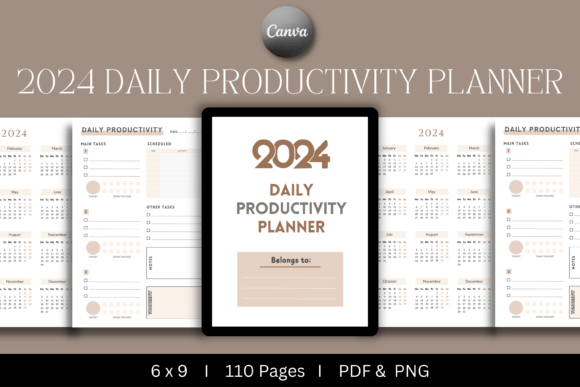
This shift aligns with broader cultural trends: the normalization of mental health care, the rise of slow living, and the preference for warmer, more human-centered design across digital and physical products. A pastel daily planner 6×9—the exact size of many popular notebooks and KDP interiors—feels personal, portable, and approachable. It is large enough to hold a meaningful schedule but small enough to be carried in a bag or displayed on a desk without dominating the space. The fact that the template comes in a no-bleed format means that even at home printing yields clean, professional results, which is essential for anyone offering their own planner to an audience that expects crisp presentation.
Why Design-Savvy Professionals Are Moving Toward Soft Structure
There is a common misconception that gentle visual design equals a lack of rigor. In practice, a pastel daily planner can be just as structured as any corporate task manager. The difference lies in how information is organized and how the eye navigates the page. Sections for top priorities, hourly time blocking, meal planning, gratitude reflection, and daily notes can be clearly delineated using subtle tinted boxes or delicate linework rather than harsh borders. The result is a schedule that guides without shouting.
For freelancers, creators, and remote workers who often operate without external accountability, this matters. When your daily schedule template blends into your environment rather than clashing with it, you are more likely to leave it open on your desk. That simple act—keeping the plan visible—reduces the likelihood of drifting into reactive tasks. Pastel tones also play well with highlighters and colored pens without creating visual chaos, which is a practical benefit for anyone who uses color-coded systems for client work, content creation, or project tracking.
Those who publish journals or planners on Amazon KDP understand the operational advantage as well. A KDP interior pack that provides 125 pages in both editable source files and ready-to-upload PDF format removes the design bottleneck. Instead of spending weeks creating a single layout, a creator can adapt the vector files in Illustrator, tweak the fonts to match their brand voice, and release multiple variations. With an included extra cover page, the leap from template to finished product is short. That agility allows small publishers to test niche audiences—teachers, therapists, new parents, creative entrepreneurs—quickly and cost-effectively.
How a Thoughtful Daily Schedule Supports Modern Habit Formation
Planners often fail because they ask too much too soon. A pastel daily schedule template that includes intentional blank space for reflection, rather than filling every inch with boxes, acknowledges that real days include interruptions and emotional shifts. This design choice aligns with what behavioral scientists call “implementation intentions”—plans that include not just what to do, but how to handle obstacles. A prompt like “Today’s focus intention” in a soft floral frame is more inviting than a stern “Goal” heading. It feels like a conversation with yourself, not a performance review.
Because the templates are available in multiple formats—PPT, SVG, EPS, and more—users can also digitize them for use in apps like GoodNotes, Notability, or even PowerPoint-based planning. A coach, for example, might customize a daily schedule worksheet in PPT, save it as a clickable PDF, and share it with clients who need a gentle but structured approach to time management. The pastel aesthetic helps the document feel less clinical, which can increase engagement, especially for individuals who feel intimidated by traditional time-management systems.
The Practical Economics of a Ready-Made KDP Interior
For entrepreneurs and side-hustlers, the conversation around planners quickly shifts from personal use to product viability. The self-publishing market on platforms like Amazon KDP is competitive, but customers are increasingly selective about interior design. They look for originality, ease of use, and emotional resonance. A pastel daily planner template bundle with high-resolution interiors and editable source files solves several problems at once. It ensures print-quality output, cuts months of design work, and provides a cohesive visual theme across all pages—consistency that reviewers and repeat buyers notice.
The 6″ x 9″ trim size is a standard that works well for paperback notebooks, and the no-bleed setup simplifies formatting for those less familiar with print production. Offering 125 pages strikes a balance between a substantial journal and a lightweight daily companion that won’t overwhelm the user. Because the source files are editable, a seller can easily change the number of pages or reorganize the internal layout to create morning planners, evening reflection journals, or hybrid weekly-daily formats. The inclusion of AI, EPS, SVG, PDF, PPT, and JPG formats means that no matter what software the creator uses, there’s a compatible starting point. That cross-platform flexibility is not just convenient—it’s a strategic asset when rapidly iterating products.
Pastel Colors and Cognitive Load: A Deeper Look
To appreciate why a pastel daily schedule works so well, it helps to understand cognitive load theory. Every visual element on a page demands a fraction of mental energy. High-contrast templates, while highly legible, can still contribute to a sense of urgency or stress over a long period. Pastel palettes, with their lower saturation and lighter value, reduce the amount of visual “noise” that competes for attention. The result is a planning experience that feels spacious and unhurried, even when the day’s activities are demanding.
This is not about diminishing the seriousness of planning. It’s about removing unnecessary friction. A soft lavender time-block grid still clearly separates hours; a muted mint habit tracker still makes progress visible. The difference is that the user’s emotional response shifts from tension to calm. Over weeks and months, that shift can improve consistency. People do not dread opening a planner that feels serene. This is a small but consequential advantage in a world where planning abandonment rates are notoriously high by mid-February.
Meeting the Demand for Customizable, Print-Ready Solutions
Market demand for printable daily planners has evolved beyond basic templates. Buyers and creators alike now expect professional typography, balanced compositions, and the ability to inject personal branding. A template pack that delivers 100 unique interiors while keeping design cohesion across all pages addresses that expectation head-on. Whether you are a blogger offering a free printable lead magnet or a KDP seller launching a new stationery line, the architectural work is already done. You can focus on marketing, audience building, and narrative positioning.
Editable source files are the unsung hero here. The vector AI and EPS files let you adjust line weights, swap typefaces, or shift color tones to align with seasonal trends or specific audience aesthetics. Don’t need all 125 pages? Edit the file and export only what you need. The SVG format is ideal for digital planning imports, while the PPT version is accessible even to beginners who may not have professional design software. This layered approach to format inclusion signals a product built for real-world workflows, not just a static design dump.
It is also worth noting that the download includes an extra cover page. In the print-on-demand world, cover design significantly influences click-through and conversion. Having an interior that pairs with a coordinating cover template streamlines the process, ensuring that the final product looks intentionally designed rather than assembled from disparate pieces. That cohesion builds trust with customers and can lead to better reviews and repeat purchases.
Building a Daily Ritual Around Gentle Accountability
The most effective planners become part of a ritual. Someone fills out their pastel daily schedule with a morning coffee, perhaps using a favorite pen that glides over thick paper. The soft colors set a tone before the first email is opened. In the evening, a brief reflection section—perhaps lined with a faint blush border—provides closure. This rhythm does not demand perfection; it offers a small anchor. The template’s structure, with its balanced sections, gently prompts the user to consider not just what they did, but how they felt and what they learned.
For coaches, therapists, and wellness professionals, such templates can become a client-facing tool. A customized daily schedule that includes a mindfulness prompt, a hydration tracker, and space for gratitude notes can support broader therapeutic goals. Because the source files are editable, practitioners can modify the prompts without altering the overall aesthetic. The result is a tool that feels tailor-made rather than mass-produced, even though it started from the same high-quality KDP interior pack.
Practical Considerations for Self-Publishers and Content Creators
If you are considering using the Pastel Daily Planner, Daily Schedule Templates for a commercial project, a few practical steps will maximize your investment. First, review all 100 interiors to understand the architectural variety. Some may feature hourly breakdowns; others might include priority matrices or self-care check-ins. Group them into logical categories—perhaps morning editions, deep work editions, weekend recovery editions. This allows you to create distinct niche products from a single purchase. Second, use the editable AI or EPS files to harmonize fonts across every page. Typography consistency is one of the top complaints in negative reviews of printable planners. Third, if you plan to sell on KDP, test-print the PDF interior on different paper stocks. Though the file is set up with no bleed and high resolution, real-world testing reveals any subtle alignment issues before you go live.
For content creators who give away templates as part of an email list or community, the pastel aesthetic performs well across social media. Flatlays of a soft pink hourly schedule with dried flowers and a ceramic mug attract attention on Pinterest and Instagram, often leading to higher share rates and opt-ins. The inherent beauty of the product does part of the marketing work.
The Enduring Relevance of Physical and Hybrid Planning
Despite the proliferation of AI assistants and smart calendars, the act of writing down a plan by hand remains stubbornly effective. Research points to improved encoding and recall when information is handwritten. A pastel daily planner combines that cognitive benefit with a sensory experience that feels restorative. It’s not about rejecting technology; it’s about integrating analog moments into a digital-heavy day. Many people now use both: a phone for shared calendars and reminders, and a pastel planner for deep intention setting and personal reflection. The two systems coexist, each playing to its strengths.
The template format supports this hybrid reality. A professional might export a weekly schedule from the PPT file, load it onto an iPad, and use a stylus to fill it out digitally during the week. On Sunday, they might print the same layout and sit down with it away from screens. The availability of multiple file types makes that fluidity possible without extra design work.
Ultimately, the growing appreciation for pastel daily planners and schedules signals something deeper: a collective recognition that how we plan is as important as what we plan. The right template doesn’t just organize tasks. It shapes mood, reinforces identity, and gently reminds us that daily life deserves spaces of beauty and calm. Whether you are a creative professional seeking personal structure, a wellness practitioner developing resources, or a KDP entrepreneur looking for a polished, ready-to-upload interior, the value lies in the fusion of form and function. A soft palette and a flexible, editable foundation provide not just a product, but a possibility—one that fits the way we live now, and the way we hope to live.