Understanding the Futsal Playbook KDP Interior: What It Offers and How to Evaluate Similar Resources
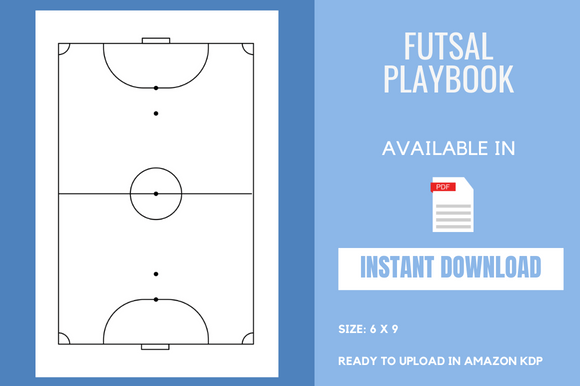
Publishers exploring the low-content book space know that interiors can make or break a product's perceived value. A Futsal Playbook KDP interior is a pre-designed PDF template meant for creating notebooks, playbooks, or training logs tailored to futsal coaches, players, and enthusiasts. The specific file referenced here includes 110 pages, a 6 x 9 trim size, and a bleed setting—features that align with Amazon KDP’s requirements for professional printing. What makes this resource distinct is not just the sport-specific theme but the combination of ready-to-upload convenience and niche appeal.
At its core, such an interior saves time for someone who wants to publish a futsal-related blank book without hiring a designer or learning layout software from scratch. The interior likely contains formatted pages—such as court diagrams, drill layouts, or note-taking sections—that repeat consistently throughout the book. This uniformity allows buyers to focus on listing optimization, cover design, and marketing rather than page composition. However, before choosing this exact product, it helps to compare its features against alternative approaches and similar templates to determine whether it aligns with your goals.
Comparing Pre-Made Futsal Interiors with DIY and Custom Options
Every low-content publisher eventually faces a choice: buy a ready-made template, create a custom interior, or use a free public-domain layout. A Futsal Playbook KDP interior sits firmly in the first category, providing immediate usability. To understand its position, consider how it stacks up against the other common routes:
- Fully DIY interior (using Canva, InDesign, etc.): Offers maximum creative freedom but demands design skills, time, and a good grasp of KDP’s technical specs. Mistakes in bleed, margin, or resolution can lead to rejected files or poor print quality.
- Hiring a freelance designer: Delivers a unique, tailored result but comes with higher upfront costs and communication overhead. Suited for unique branding but less efficient for testing a niche quickly.
- Generic sports-themed interiors: Often broader (e.g., “soccer” or “training log”) and may not include futsal-specific elements like smaller court shapes or position labels. A dedicated futsal design signals a deeper understanding of the sport to customers.
- Pre-made futsal templates like this one: Blends convenience and niche relevance. You sacrifice uniqueness—the same interior may be sold to multiple publishers—but gain speed and a tested format. If the interior includes bleed and is already sized 6 x 9, many technical hurdles are already resolved.
This comparison highlights a tradeoff: originality versus efficiency. A publisher targeting coaches who want a branded team playbook might lean toward custom design, while someone testing a new niche or building a quick portfolio may find the pre-made option more practical.
What Separates a Useful Futsal Interior from a Generic Notebook Template
Not all sports-themed interiors deliver equal value. Several factors differentiate a well-executed Futsal Playbook KDP interior from a simple set of ruled pages with a futsal-themed header. Key differentiators include:
- Page functionality: Does the interior include futsal-specific diagrams, such as a pitch layout for drawing tactics or half-court patterns? A generic notebook might only have blank or lined pages, which fails to serve the core audience.
- Consistency across pages: A professional template repeats layouts accurately. Misaligned graphics or inconsistent spacing can look unprofessional and increase return rates.
- Bleed and trim handling: When a PDF claims “bleed setting,” it should mean that images or design elements extend past the trim line, preventing white borders after cutting. This detail matters because Amazon KDP often has strict bleed requirements; many beginners overlook it and end up with poor print results.
- Print-friendly design: Heavy ink coverage or intricate backgrounds might drive up printing costs or cause show-through. A thoughtful interior balances visual appeal with practical inking limits.
When evaluating any futsal playbook interior—including the one described—look for samples that show actual page spreads. If the seller provides only a cover image or vague description, you may need to ask for more detail or assume some risk. The listed 110-page count hints at a substantial notebook but not an unwieldy one; it’s a reasonable length for a seasonal playbook or training journal.
When a Pre-Designed Futsal Playbook Interior Is Likely the Right Fit
This type of resource shines in several practical scenarios. Recognizing those situations can help you avoid both over-investment and missed opportunities. Consider choosing a ready-made futsal playbook interior when:
- You want to validate a futsal niche quickly: Speed matters in testing. Uploading a book within hours lets you gauge demand before committing weeks to a custom design.
- Your budget is limited: The cost of the interior is typically far lower than hiring a designer. If it helps you break even or earn royalties without large upfront spending, the math works.
- You’re building a catalogue of related sport journals: A consistent visual language across futsal playbooks, indoor soccer guides, and similar products can establish a recognizable brand. The pre-made interior allows you to launch faster.
- You lack design expertise but understand the sport: If you know what futsal players and coaches need, you can pick a well-structured template and add value through covers, descriptions, and keywords rather than page layouts.
For many first-time KDP publishers, the appeal is clear: you remove the technical barrier and can focus on market positioning. A template with bleed already considered saves you from common formatting headaches that cause Amazon rejections.
Situations Where a Different Interior Might Serve You Better
No single template fits every project. There are times when passing on a pre-made Futsal Playbook KDP interior is the smarter move. A few examples:
- You need copyright ownership or exclusivity: If you plan to brand the book heavily or sell it off Amazon as a proprietary product, sharing an interior with other publishers might dilute your offering. In that case, a custom design or exclusive licensing makes sense.
- The interior’s page design doesn’t match your audience’s age or skill level: A playbook for youth futsal might require larger diagrams and simpler terminology, while one for elite coaches might need more complex tactical zones. Without flexibility, the fixed template could feel too generic.
- You want to offer a series with varying interiors: If you plan to release multiple versions (e.g., goalkeeper-specific, formation-specific), a single 110-page template won’t adapt. You’ll either need multiple templates or the ability to edit the source file—something a PDF alone doesn’t provide.
- Your target market is sensitive to perceived value: Repeat customers might notice that another seller uses the same interior. While not a dealbreaker for everyone, it can affect long-term brand loyalty and reviews.
These limitations don’t diminish the product’s utility for the right user. They simply mean that a publisher should audit their own business goals and audience expectations before purchasing. Being aware of these tradeoffs leads to more confident, informed decisions.
Practical Comparisons: Futsal Playbook vs. Broader Sports Journals vs. Blank Note-taking Interiors
To sharpen your decision-making, imagine three different product scenarios:
Scenario A: You buy the futsal playbook interior and combine it with a vibrant cover that speaks to amateur adult leagues. The book sells as a “Futsal Coach Strategy Notebook.” Buyers find the interior useful because each spread has a half-page court diagram and half-page for notes—a design specific to futsal.
Scenario B: You use a generic “Soccer Coach Playbook” interior that contains full-field diagrams. Futsal players find the layout larger than needed and less relevant, leading to higher return rates. This highlights how niche precision can matter.
Scenario C: You design a completely unique interior from scratch, incorporating player evaluation forms, seasonal planning templates, and custom drill pages. The result stands out but took 20 hours and multiple software trials to perfect. The tradeoff is time vs. originality.
The pre-made interior offers a middle ground: it’s not as hyper-targeted as a custom build, but far more relevant than a misapplied generic template. For many, that balance is exactly what they need to start earning royalties without drowning in complexity.
What to Look For in the Product Details Beyond the Page Count
When the description says “A PDF file with 110 Pages Ready to upload” and “Size 6 X 9” with “BLEED setting,” several underlying expectations arise. They matter because KDP’s print-on-demand system strictly interprets these specs. If the interior PDF doesn’t actually include bleed (just says it does), the result may be truncated images. So it’s worth verifying:
- Bleed implementation: True bleed means design elements extend at least 0.125 inches beyond the trim line on each side that needs it. Without this, trimming inaccuracies can create white slivers along edges.
- 6 x 9 sizing: This is a common trade size that works well for notebooks. Make sure the interior PDF matches exactly; scaling a different size to 6x9 can distort elements or cause KDP errors.
- 110 pages: This count likely includes front and back matter. Check whether the interior has too many or too few usable pages for your target price point and audience expectation. A coaching playbook of 110 pages might be acceptable, but if customers expect 150+, you might need to adjust.
Additionally, observe the seller’s claim about its benefit: “help you increase your royalties and take your business to the next level.” While that language is promotional, the underlying point is that a well-formatted interior can reduce returns and improve the customer experience, which indirectly supports rankings and repeat purchases. The actual impact depends on how you market the book and how well the interior fits the audience.
Time and Money Tradeoffs: Upfront Investment vs. Long-Term Earnings
Costs for pre-made KDP interiors range widely. A focused futsal playbook template may cost anywhere from a few dollars to a moderate one-time fee. Compare that with the value of your time: if it takes you eight hours to learn a design tool and build a comparable interior yourself, even a modestly priced template saves several days of work. However, the template’s cost is per-use; if you plan to publish ten different interiors, the cumulative expense may justify learning to design your own.
On the royalty side, a niche interior can potentially support a slightly higher price point because the buyer perceives specialized content. A blank futsal playbook priced at $7.99 might sell similarly to a generic athletic journal at $5.99 if the cover and description effectively communicate the sport specificity. That margin difference can pay back the template cost quickly. Still, no interior guarantees sales—market demand, cover design, and keyword competition remain primary drivers.
Integrating the Interior into a Larger Product Strategy
The futsal playbook interior isn’t just a standalone asset; it can be part of a broader publishing approach. For example, you might create a series that includes levels (beginner, intermediate, advanced) or companion products such as a futsal club manager’s log. The template’s fixed design might limit direct adaptation, but you could use the same interior for different covers, effectively testing multiple angles in the niche without additional design work. That testing capability is one reason such resources remain popular among self-publishers.
When evaluating whether to invest, map out how many variations you realistically need. If your goal is to dominate a narrow sub-niche with one strong book, the one-time purchase may be fine. If you foresee needing five distinct interiors, you might look for a set or consider a more flexible design approach from the outset.
Making an Informed Decision Without Overstating Promises
No product alone transforms a business. A Futsal Playbook KDP interior solves a specific, technical problem: it gives you a print-ready, sport-themed notebook template. It doesn’t create demand, write compelling descriptions, or guarantee BSR improvements. Its real value emerges when combined with solid market research and a clear understanding of who is buying futsal notebooks—perhaps coaches preparing for tournaments, players tracking drills, or trainers logging sessions.
Before purchasing, ask yourself: What does my ideal customer want to fill in this book? If the answer aligns with the interior’s page types, and you can execute a good cover and listing, the template makes sense. If you’re unsure about the audience or cannot find similar products selling steadily, consider starting with a less niche-specific interior or testing the market through keyword research first.
In the end, the futsal playbook interior functions as a tool among many. Its blend of bleed-ready formatting, sport-specific focus, and instant upload capability positions it well for time-strapped publishers or those testing the futsal/low-content overlap. By weighing the tradeoffs around exclusivity, flexibility, and upfront cost, you can decide whether this resource fits your current phase of publishing or whether a different path offers a stronger foundation for your goals.