The Undated Reservation Book That Keeps Your Restaurant Organized
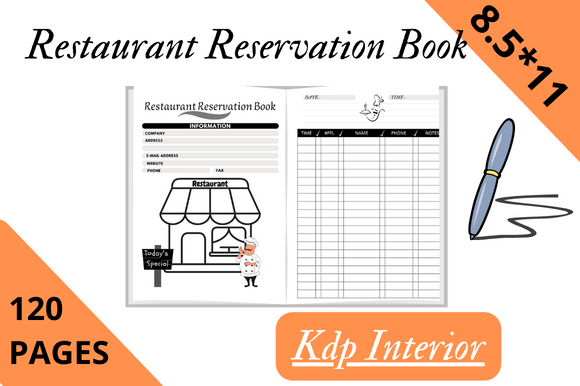
In a world where restaurant tech promises to solve every front-of-house headache, a quiet truth remains: physical tools still win on reliability. A well-designed reservation book for restaurant use doesn’t crash, doesn’t lose power mid-service, and doesn’t require staff to squint at a screen while greeting guests. The daily reservation book for the restaurant is undated—and that single detail unlocks a level of flexibility most planners and pre-printed logs simply cannot match. This professional restaurant reservation book holds 120 undated pages, giving you full freedom to start on any date, skip slow Tuesdays, or shift seasons without wasting paper. For anyone who values clarity under pressure, this book becomes the backbone of a smooth service.
Why an Undated Reservation Book Gives You More Control
Pre-dated books force you to work on their schedule. If July is dead and the pages sit empty, you still pay for them with guilt. With an undated system, every page earns its place. You begin when you need to, whether that’s the first day of a soft opening or the middle of a holiday rush. The 120 pages can stretch across an entire year if you fill one per service, or they can cluster around a three-month patio season without waste. Small business owners, pop-up chefs, and caterers especially appreciate this: they aren’t locked into a calendar they can’t control. This reservation book for restaurant operations becomes a responsive tool, not a rigid form.
Flexibility also means you can adapt your layout. Maybe you run lunch services Thursday through Sunday only. You skip the Monday–Wednesday blocks entirely. Or perhaps you host a weekly wine dinner and want to set aside a dedicated page each week without breaking the pre-printed flow. The undated approach invites you to customize how you record, rather than conforming to someone else’s idea of your business rhythm.
Practical Layout Designed for Front-of-House Efficiency
Open the book to any page and you’ll find a clean, intuitive structure. Each of the 120 pages contains 20 book entry holes—numbered slots that prevent overbooking and keep the host stand organized at a glance. The 5 columns are clearly labeled: Time, Number of Guests, Name, Phone Number, and Notes. This isn’t a guesswork template. It’s the distilled wisdom of what a busy host actually needs to capture in the moment of a phone call or walk-in inquiry.
The Time column lets you block reservations in 15-minute intervals or staggered half-hours depending on your flow. Next to it, Number of Guests helps you quickly scan for party sizes and table combinations. Name and Phone Number sit side by side so callback confirmations or last-minute changes become effortless. The Notes column is where the real hospitality lives: dietary restrictions, high-chair requests, anniversary celebrations, a guest who prefers a quiet corner. Because the book measures a perfect 8.5 x 11 inches, there’s enough room to write legibly without cramming, yet it’s compact enough to sit on a host stand without dominating the space. The matte cover resists coffee spills and smudges, and it looks professional in any setting from a bistro to a fine dining room.
Creative Ways to Extend the Use of Your Reservation Book
A reservation book for restaurant work doesn’t have to handle only evening dinner service. The undated pages invite resourcefulness. Here are a few variations that owners and managers have found practical:
- Dual-purpose lunch and dinner log: Split each page with a horizontal line. The top half records midday reservations; the bottom half handles evening. It keeps both services visible on one spread.
- Private event tracker: Use a separate section of the book to log booked parties, deposits, contact names, and special menu requests. Because the pages aren’t tied to dates, you can cluster events without confusing daily service.
- Waitlist and walk-in log: During peak hours, switch to a dedicated page for walk-ins. Record the estimated wait time in the Time column, party name, and phone so you can text when a table opens. The Notes field can capture where they’re waiting—bar, patio, outside.
- Delivery and takeout order register: For cafes and small bistros that handle a high volume of takeout, repurpose a few pages to log pickup times, order names, and special instructions. The 20-entry holes keep the list tidy.
- Catering prep and staff scheduling: Freelance caterers and small event chefs can use the columns to note delivery times, headcounts, client names, menu variations, and even assign staff initials in the Notes field.
The beauty of the undated design is that you don’t need to commit to a single use. A seasonal bakery might fill 80 pages with custom cake orders in the spring, then switch to a weekly pop-up reservation log in the summer. The book morphs with your business, never forcing you to start a fresh planner mid-year.
Keeping Your Reservation Desk Consistent and Professional
Even the best template can devolve into chaos if the team doesn’t apply a few simple conventions. Good habits turn this reservation book for restaurant use into a reliable point of truth. First, agree on a time format—24-hour clock or AM/PM—and stick to it. Inconsistent notations lead to double bookings. Use the Notes column for anything that affects the guest’s experience: allergies, mobility needs, booster seat requests, a VIP code known only to the kitchen. Writing “Booth preferred, husband gluten-free” might feel like a small act, but it transforms the guest’s arrival from a transaction into a prepared welcome.
Color coding adds visual speed. A slim highlighter stripe in the Time column can indicate large parties, or a small dot in the Notes margin can flag a birthday. If you use pencil for reservations, last-minute changes feel stress-free; if you prefer ink for audit purposes, use a sticky note for tentative holds and commit only when confirmed. Whatever system you choose, brief your entire front-of-house team. A five-minute lineup training on how to read the book prevents confusion during the Friday night rush.
The 8.5 x 11 size gives you room to write legibly, but it also means you can scan an entire page in seconds. Place the book near the host stand at a consistent angle, and consider a bookstand to keep it slightly elevated, reducing clutter. Consistency in placement, notation, and handwriting makes the book a non-negotiable tool rather than an afterthought.
Who Benefits Most from This Reservation Book?
It’s easy to assume a reservation book for restaurant staff is only for high-volume dining rooms, but the real value spreads across many types of food ventures. A small café that offers afternoon tea seatings might only use a page per week, but the undated design means that one book can last them over two years. A pop-up dinner series that runs every other month doesn’t need 52 pre-dated weeks; they need a physical record of exactly the nights they serve. The book lets them open a fresh page for each event, log the 20 guests, and archive it cleanly.
Food truck operators with limited counter space appreciate the straightforward layout. They can log pre-orders for a special menu drop, noting pickup times in the Time column, customer names, and phone numbers. Private chefs who cook in clients’ homes use the pages to track dinner party schedules, guest counts, and menu alternations—the Notes column becomes a mini prep sheet. Bed-and-breakfast owners record breakfast seatings and dietary preferences, while keeping the book small enough to carry from the kitchen to the front hall. In every case, the common thread is the need for a portable, analog failsafe that doesn’t depend on Wi-Fi or battery life.
Making the Most of 120 Undated Pages
One of the quiet frustrations with many restaurant logs is that they either run out too soon or lock you into a calendar year. Here, 120 undated pages offer generous capacity without pressure. A restaurant that averages 4 dinner services a week could fill one page per service, making the book last roughly 30 weeks—well over half a year. Those with lower volume might stretch it across an entire calendar year. The matte cover is durable enough to survive being tossed into a drawer or carried to offsite events, and the binding lies reasonably flat for easy writing.
To maximize value, consider labeling each page not just with the date but with the service name if you run multiple concepts. A gastropub that shifts from brunch to dinner can head the page “Sun Brunch, 4/27” and avoid mixing reservation styles. If you want to archive pages for future reference, the 8.5 x 11 inch size fits standard document sleeves or binders, making record retention simple. For businesses that need to track no-shows or repeat guests, flipping back through past pages provides a quick memory aid that no app notification can replicate.
Simple Systems That Support Real Hospitality
There’s a reason the most esteemed restaurants still keep a paper reservation book on the host stand, even when they use digital booking platforms. It offers a human-scale backup. A power outage, a crashed server, or a glitchy app won’t erase the handwritten names. It also communicates something to guests: that their booking matters enough to be written down with care. The act of recording a name and phone number in a neat hand, while repeating back the details, builds trust before the guest ever walks through the door.
The daily reservation book for the restaurant is undated, well-proportioned, and structured around the real workflow of a busy front-of-house team. It’s not just a placeholder until you find a software solution; it’s a deliberate choice for reliability, flexibility, and personal connection. By choosing a professional reservation book with 120 undated pages, you equip your team with a tool that adapts, lasts, and keeps the focus where it belongs: on the people you’re about to serve.