Integrating Mine Finder Puzzle Book for KDP Part 04 into Your Low-Content Publishing Routine
Self-publishers who build a steady income with puzzle books know that every hour saved on design and formatting is an hour gained for marketing and expansion. Mine Finder Puzzle Book for KDP Part 04 arrives as a ready-to-publish asset pack, not a set of tutorials or partial templates. It provides a complete interior PDF, a matching cover file, and a structured keyword spreadsheet, all aligned with the 8.5×11-inch trim size that works reliably within Amazon’s Kindle Direct Publishing ecosystem. The package cuts out the repetitive design work, letting you move directly to branding, listing optimization, and launch planning.
Breaking Down What Part 04 Actually Contains
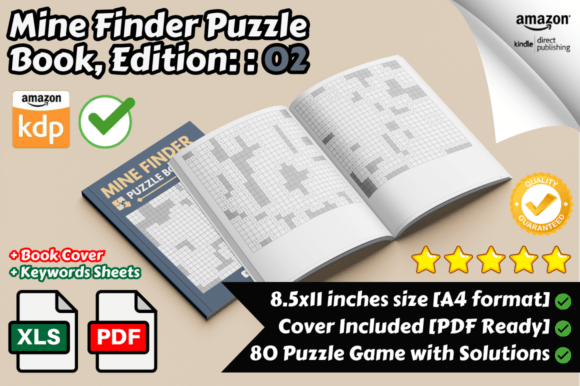
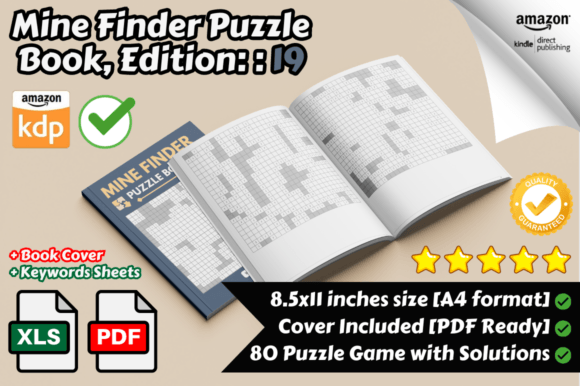
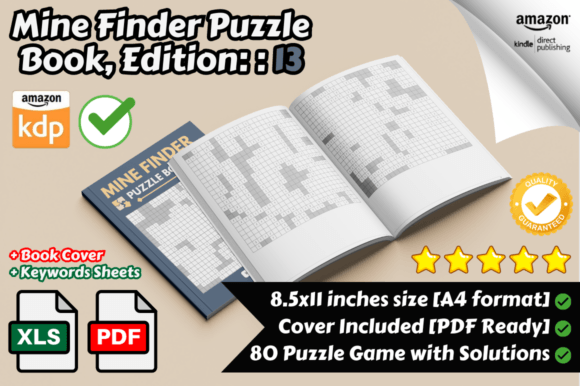
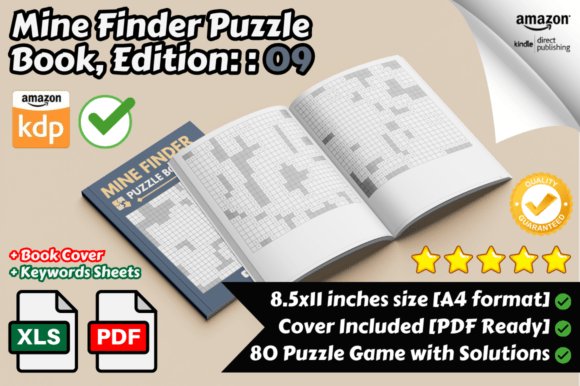
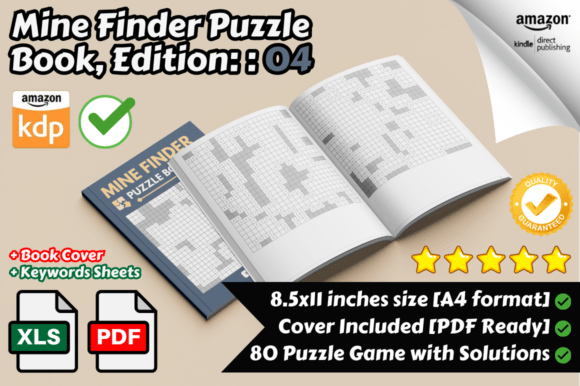
Before slotting this asset into your workflow, it helps to understand the granular deliverables. The core of the product is a 160-page PDF interior. All 80 puzzle pages are unique, followed by an orderly set of 80 solution pages. No mixed content, no clutter. The puzzles are grid-based logic challenges (often referred to as “Mine Finder” or Minesweeper-style puzzles) that appeal to a broad adult audience looking for mental stimulation, relaxation, or a break from screen time. The companion Excel sheet houses a collection of targeted keywords, search terms, and category suggestions. Finally, a professionally designed cover PDF is included, ready for light customization or immediate use.
Because this is labeled Part 04, you are not starting from zero. If you already own earlier volumes, you can extend the series with consistency. If this is your first purchase, you can still use it as a standalone product or as a template for future puzzle types you might create yourself.
Where This Product Fits in the Publishing Workflow
Every KDP project moves through three broad stages: planning, production, and post-launch optimization. Mine Finder Puzzle Book for KDP Part 04 influences each stage differently, and using it effectively means understanding which activities still require your attention.
Before Starting a New Title
If you are researching niches, the keyword spreadsheet acts as a shortcut. Instead of starting with a blank Amazon search bar, you can analyze the provided terms, check search volume estimates, and identify low-competition long-tail phrases. This helps you decide how to position the book’s subtitle, what categories to select during setup, and even whether to bundle Part 04 with earlier editions to create a value pack. During this planning phase, you might also sketch out a release calendar, because having a ready-made interior means you can set an aggressive publishing schedule without sacrificing quality.
During Production and Assembly
The most time-intensive part of puzzle book creation—designing puzzles, checking logic, and formatting solutions—has already been done. Your production tasks narrow to branding and optional customization:
- Open the cover PDF in your editing software. Add your own author or imprint logo, adjust the subtitle, or tweak color accents to match a series look.
- If you want to include a copyright page, a title page, or a short introduction, you can insert those pages into the interior PDF using a PDF editor or by converting to a format your layout tool handles. However, since the interior is print-ready as is, you may choose to upload the existing file directly and save time.
- Verify that the internal page numbering and puzzle instructions are clear. The included solutions are arranged sequentially, which reduces friction during proofing.
After Publishing and During Launch
Once the book is live on Amazon, the keyword spreadsheet continues to add value. Use the data to write a compelling A+ Content description, craft Amazon Advertising campaigns, and structure your backend keyword fields without stuffing. Because the puzzles are self-contained, you can also create short video walkthroughs or sample puzzle images for social media pins, all directly derived from the interior PDF. The post-launch phase becomes about amplification rather than scrambling to fix formatting errors.
Streamlining Production with a Preformatted Interior
Many new publishers underestimate the friction of aligning puzzle grids, solution keys, and page margins across a printable format. With this asset, errors like misaligned cells, inconsistent font sizes, or accidental truncation have been minimized. The 8.5×11-inch size is large enough for comfortable solving while remaining economical for print-on-demand. Because KDP’s print standards require specific gutter and bleed settings, the PDF’s compliance spares you the guesswork. Simply upload the interior file, use the KDP previewer to double-check pagination, and approve.
If you later decide to produce a small-print run outside of Amazon, the same file can be sent to a local printer, provided the dimensions are supported. The universality of PDF makes the asset reusable across platforms like IngramSpark or Lulu with minimal technical adjustments.
Leveraging the Keyword Spreadsheet for Better Discoverability
The included Excel spreadsheet is not just a list of terms; it is a launchpad for refining your Amazon listing strategy. Real keyword research for puzzle books often involves balancing broad terms like “puzzle book for adults” with specific modifiers such as “minesweeper logic puzzles” or “brain teasers large print.” The spreadsheet groups related phrases, helping you construct a title and subtitle that feel natural while capturing multiple search intents.
Practical implementation looks like this:
- Open the spreadsheet and copy the highest-potential keywords into your backend search term fields, adhering to Amazon’s character limits.
- Select two or three terms to embed in the book’s subtitle and bullet points.
- Use the spreadsheet to identify underserved sub-niches. For example, if “senior brain games” appears alongside “Mine Finder,” you might angle your book description to highlight cognitive benefits for older adults.
- Refine the data over time by removing terms that don’t generate traffic and introducing seasonal modifiers during holiday gifting seasons.
This structured approach moves you away from guesswork and toward a repeatable listing optimization habit.
Adapting the Cover File for Professional Polish
Covers sell puzzle books. The provided PDF cover file has already been sized for the exact page count and trim, including the correct spine width calculation for 160 pages on white paper. When you download it, note the bleed area and ensure that any custom elements you add (author name, series number, subtle tagline) do not encroach on critical margins. You can edit the cover in Canva, Adobe Photoshop, or even a free PDF annotation tool that supports text overlays. If you maintain the same visual structure across Parts 01 through 04, returning customers will instantly recognize your series on the search results page, building a small brand equity over time.
Quality Control Checks Before You Hit Publish
Even with a professionally prepared interior, human review remains essential. Before finalizing your KDP upload:
- Print a proof copy. Order a physical author copy and solve a random puzzle yourself. Verify that the solution matches the puzzle exactly. The digital copy looked flawless on screen; the printed ink density can reveal faint grid lines that need darkening.
- Check page breaks. Scroll through the KDP Online Previewer. Ensure that no puzzle gets orphaned and that each solution faces the correct puzzle page or follows a logical order. While the PDF is already sequenced, your inserted front matter pages could shift things.
- Validate links (if any). If you add a QR code or a URL to a bonus puzzle, test it from a mobile device.
- Review the cover spine alignment. Amazon’s printing can shift slightly; order a proof to confirm that the spine text sits centered.
This quick but methodical verification protects your reviews from angry customers who discover a broken puzzle. The reputation of your publishing imprint depends on consistency more than on volume.
Building a Cohesive Series with Part 04
Many puzzle book creators stop after one or two titles because re-creating fresh puzzles becomes exhausting. The numbered part system solves that. You can release Part 04, then go back and launch Parts 05, 06, or a “Volume 1–4 Collection” with slight layout adaptations. The consistent trim size and interior style mean that bundling later requires almost no redesign. If you store the editable cover source files, you can batch-create covers for the entire series in an afternoon.
From a marketing angle, series publishing allows cross-promotion. Include a “Also in this series” page listing other volumes, which Amazon’s paperback format permits. Use the keyword spreadsheet to identify related categories and apply them strategically across different parts—expanding your visibility without duplicating effort.
Long-Term Use, Repurposing, and Avoiding Content Fatigue
Once you own the rights to use this interior (which typically comes with standard commercial licensing for KDP), the PDF can be reused in multiple ways beyond direct publishing:
- Lead magnet variation. Extract a handful of puzzles to offer as a free downloadable sampler on your author website in exchange for email sign-ups.
- Translation. The puzzles themselves are language-independent except for brief instructions. Translate the title page and cover into Spanish, German, or French, and publish localized editions on Amazon’s various marketplaces.
- Adapt to other formats. Convert the puzzles into individual image files for creating a Kindle interactive puzzle book (though that requires more work).
- Membership content. If you run a Patreon or a subscription newsletter, the puzzles can serve as monthly brain teaser drops.
This flexibility makes Mine Finder Puzzle Book for KDP Part 04 not just a one-off product insertion but a reusable creative resource. It interacts well with your broader toolset: combine it with a Canva Pro account for quick cover tweaks, a Helium 10 or Publisher Rocket subscription for deeper keyword validation, and a print-on-demand aggregator for multi-platform distribution.
Integrating This Asset into a Broader Business Workflow
For freelancers who offer KDP book formatting services, this type of puzzle interior can serve as a base template for client projects. Instead of building from scratch, customize the cover and quickly deliver a polished product. For entrepreneurs running their own portfolio of puzzle books, treating each part as a module in a larger system reduces cognitive load. You can delegate the uploading and proofing tasks to a virtual assistant by providing them with a simple checklist built around this specific asset.
Real efficiency emerges when you combine the PDF interior, the keyword data, and the cover file into a repeatable launch sequence: template → customize → proof → upload → optimize. By the time you reach Part 04, that sequence should feel predictable and even automated. The fewer unique variables you introduce, the faster you can scale. And scalability is where sustainable passive income lives for KDP publishers.