Mine Finder Puzzle Book for KDP Part 09: A No-Nonsense Evaluation for Self-Publishers
For independent creators building a catalog on Amazon KDP, ready-made puzzle interiors can be a genuine shortcut — or a frustrating dead end, depending on what's inside the file. Mine Finder Puzzle Book for KDP Part 09 is one of those products that warrants a clear-eyed look, especially if you're weighing time savings against originality. This isn't a flashy novelty; it's a 160-page PDF package built for a specific niche, and understanding its practical strengths and limitations matters if you plan to publish, sell, or gift it.
What You Actually Get With This Package
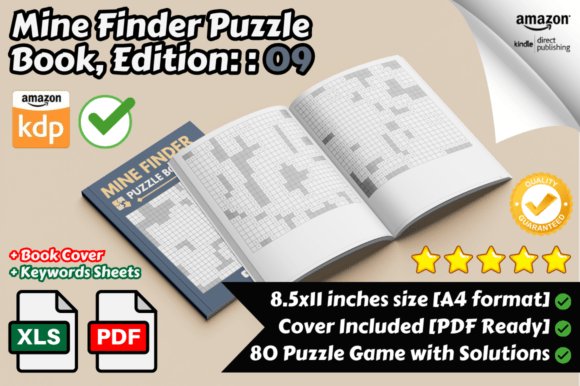
Before evaluating usefulness, it helps to unpack exactly what's included. The core offering is a downloadable bundle that contains three elements:
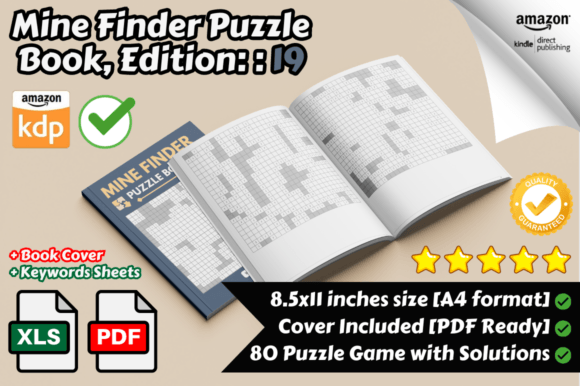
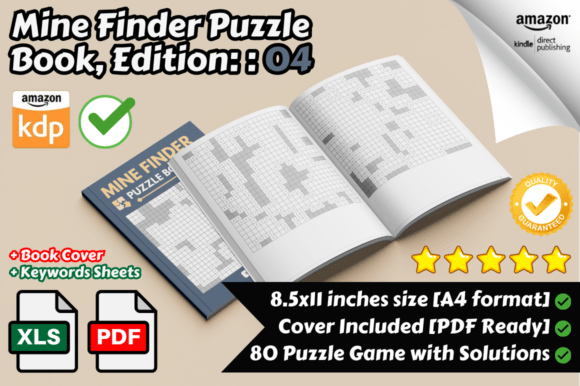
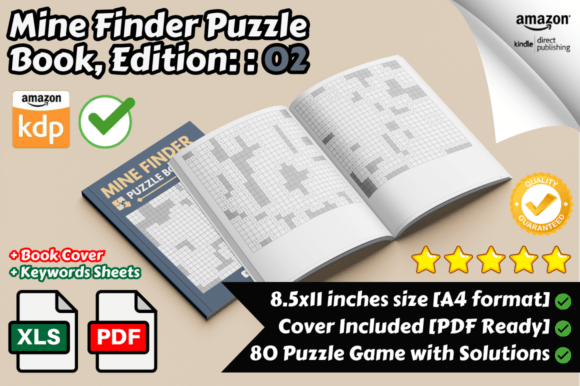
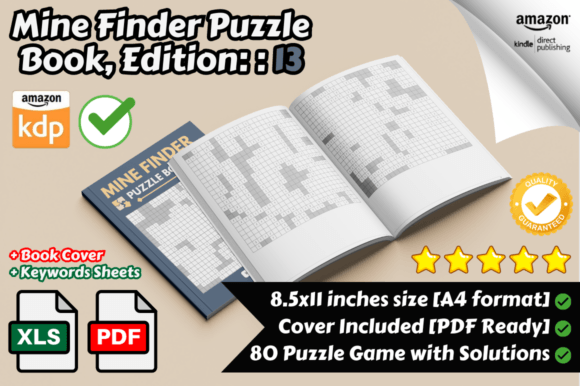
- A PDF interior file sized at 8.5 x 11 inches — 80 pages of Mine Finder puzzles followed by 80 pages of solutions.
- A PDF cover file designed to match the interior and give the book a finished appearance.
- An Excel spreadsheet filled with relevant keywords intended to improve discoverability on Amazon and other marketplaces.
The interior is the real workhorse. All puzzles share the same trim-friendly dimensions, making it straightforward to upload directly to KDP without wrestling with margins or bleed settings. Solutions mirror the puzzle layout, so flipping from puzzle to answer feels intuitive. The total page count (160) also meets the sweet spot for a puzzle book: substantial enough to feel like a complete purchase, yet not so heavy that printing costs eat your entire royalty margin.
Understanding the Mine Finder Puzzle Niche
Mine Finder puzzles — logic grids based on the classic Minesweeper concept — have a steady, if not explosive, audience. They appeal to people who enjoy methodical deduction rather than vocabulary or math challenges. The Mine Finder Puzzle Book for KDP Part 09 leans entirely into this single puzzle type, which is both a strength and a deliberate limitation. Instead of mixing mazes, sudoku, and word searches, it stays focused. That focus can help you target shoppers searching specifically for "mine finder puzzle books" or "logic puzzles for adults," because your listing won't feel like a generic grab bag.
Professionally speaking, single-puzzle books tend to attract repeat buyers. Once someone enjoys solving one collection, they look for similar titles. If you plan to release multiple volumes (Part 09 suggests there are others in the series), a consistent theme can build a small following. However, strong niches mean you must nail the difficulty curve. If the puzzles are too easy, readers breeze through in an afternoon; too hard without any progression, and you’ll get returns. From the description, the interior is "carefully curated to provide just the right level of challenge," but without a preview of sample grids, you'll have to trust the creator's balance or test a printed copy yourself.
Print-Ready Interior Quality and Real-World Usability
A major selling point is the "meticulously crafted" PDF interior. For many KDP publishers, the nightmare isn't content creation — it's formatting. This file likely arrives as a single PDF, already paginated, with puzzles set on the right-hand pages and solutions following in a clear block. That saves hours of layout work. The 8.5 x 11-inch format is a standard trim that won't cause unexpected printing hiccups. In practice, that means you can upload, preview, and order a proof copy the same day.
But there's a catch: a pre-built PDF interior isn't easily editable. You can't insert a "Thank you for purchasing" page, add your author name on individual puzzle pages, or tweak the font choice without breaking the file. If you want to brand the book as your own beyond the cover, you'll either need PDF editing software (which may re-flow elements) or accept that the interior remains anonymous. Some sellers simply add a title page by placing a separate PDF page in KDP's uploader, but that won't change the internal look. For hobbyists or quick product testers, this is a minor issue; for serious brand builders, it's a significant limitation that may steer them toward creating their own source files instead.
Another practical point: because the solutions are included as separate pages, the book has no blank note pages or extra content. That's fine for a straightforward puzzle book, but it also means no opportunities to upsell or invite readers to the next volume inside the interior. The product offers exactly what it says — no less, no more.
Cover File and Keyword Spreadsheet: Support or Afterthought?
The included cover PDF gives you a ready-to-publish face for your puzzle book. From the description, it's "professionally designed," which likely means a clean, genre-appropriate layout with standard puzzle imagery. For someone testing the KDP waters, a pre-made cover eliminates the need to hire a designer or struggle with DIY tools. The flip side: you won't own a unique cover. Other users buying the same package may launch identical covers on the same marketplace, diluting any visual distinctiveness. If you're serious about building a recognizable series, you'd be wise to use the supplied cover as a placeholder or inspiration and commission a custom version later.
The Excel spreadsheet of keywords is, in many ways, more valuable than it seems. New publishers often underestimate how deeply keyword research affects sales. A curated list takes some of the guesswork out of backend fields and ad campaigns. However, keyword effectiveness depends on timeliness — terms that work today might shift in six months. Treat the spreadsheet as a starting foundation, not a permanent asset. Combining those seed keywords with your own research will yield better results than pasting them in blindly.
Who Stands to Benefit the Most
The profile of an ideal user for Mine Finder Puzzle Book for KDP Part 09 is someone who values speed and reliability over deep customization. That could include:
- New KDP publishers who want a low-risk product to learn the publishing workflow without getting bogged down in puzzle creation.
- Busy creators building a large catalog of puzzle books across multiple niches and who need filler titles that won't eat production time.
- Educators or activity directors looking for reproducible handouts; the 8.5 x 11 format makes it easy to print single puzzle pages for classroom or senior center use.
- Freelancers offering done-for-you KDP services who need reliable interiors for multiple clients without starting from zero each time.
In all these cases, the product's value lies in removing friction. You're not buying a masterpiece; you're buying a solid, tested layout that lets you hit publish and move on.
Potential Drawbacks That Deserve Honest Acknowledgment
Every ready-made asset comes with trade-offs, and this one is no exception. Beyond the editability barrier already discussed, consider these points:
- Market saturation risk. While Mine Finder puzzles aren't as ubiquitous as sudoku, they're still available. If multiple sellers upload the same interior, price wars can erode margins. Without distinctive branding or reviews, standing out becomes tough.
- Lack of difficulty labeling. The product doesn't mention progressive difficulty tiers. If all puzzles hover at a similar challenge level, readers may lose interest after a dozen puzzles. A mix of warm-up, intermediate, and hard puzzles would extend engagement, but we can't assume that's present.
- No interior preview. Without seeing a few sample pages, you're relying on the creator's judgment. Consider ordering a proof before investing in marketing; occasionally, PDFs contain alignment glitches or font embedding issues that only appear in print.
- Single-use purchase mentality. Once you publish the book, that's it. There's no mechanism for updating or refreshing the content later. You're buying a finished product, not a template system.
These aren't deal-breakers, but they're exactly the sort of practical considerations that separate a smart purchase from a regrettable one.
How the Product Holds Up in the Long Run
Long-term value depends on how you use it. If you upload the Mine Finder Puzzle Book for KDP Part 09 as-is, run a few Amazon ads, and earn back the cost within the first few sales, it's a small win. The real leverage comes from treating it as a template blueprint. Study the puzzle difficulty curve (or note its absence), examine the solution formatting, and reverse-engineer what works. That knowledge can then feed your own original puzzle books down the line.
For those who want to build a series, the Part 09 designation hints at a full lineup. Using multiple volumes from the same creator gives you a consistent look across books, which can foster buyer trust. However, check whether each part has sufficiently varied puzzles to justify repeated purchases. If Part 09 merely repackages the same puzzle patterns as Part 05 with a new cover, your series loses credibility quickly.
Practical Recommendations Before You Publish
If you decide to move forward with this asset, a few steps will increase your chances of a smooth launch:
- Request or view a sample page. Even a single screenshot can reveal font choices, grid line clarity, and spacing quality.
- Print and solve a few puzzles yourself. Nothing exposes errors or illogical clues faster than personal testing.
- Modify the cover or at least overlay your own branding. Use the provided file as a base, then add subtle changes — a different color, a logo, or a series badge — to differentiate your listing.
- Expand the keyword list by running a reverse ASIN lookup on similar ranking puzzle books. Layer those terms into your detail page for wider reach.
- Prepare for customer questions. Since the interior is fixed, be ready to describe the exact puzzle count and difficulty level in your description. Avoid vague promises.
Is This the Right Fit for Your Workflow?
There's no universal answer, but you can gauge fit by asking one question: Do I need a complete, ready-to-publish product right now, or am I building a long-term brand identity that demands full control? If it's the former, the Mine Finder Puzzle Book for KDP Part 09 offers a clean, usable interior that respects your time. If it's the latter, you might still use this as a learning tool while developing your own puzzle sets from scratch.
What this package does well is reduce the technical burden of formatting and puzzle generation. It leaves the creative ownership and strategic positioning squarely in your hands — exactly where it belongs. Approach it not as a finished masterpiece but as a well-organized resource that gets you 80% of the way to a published product. The remaining 20% — your targeting, your listing optimization, your brand voice — will determine whether the book finds its audience or fades into the background.
Ultimately, the product delivers on its promise: a completed puzzle interior, a matching cover, and a keyword starting point. The real work begins after the download. How you package, position, and promote it will make the difference between a random title and a dependable part of your publishing portfolio.