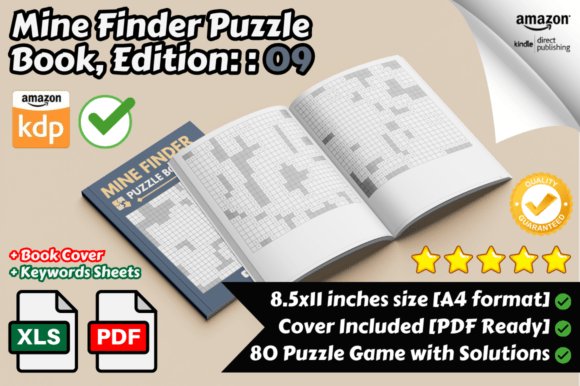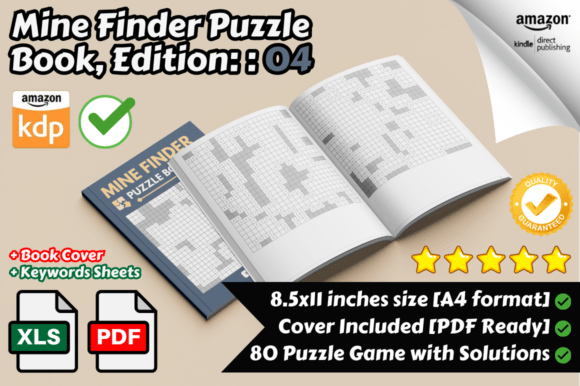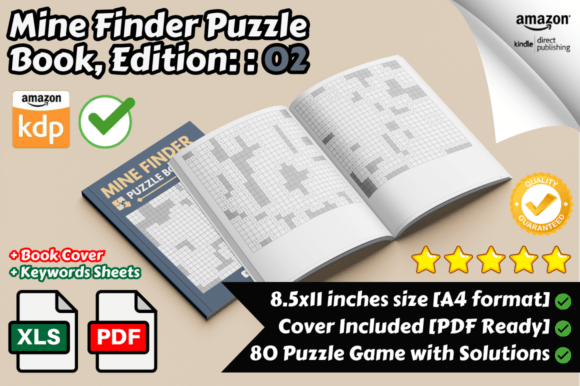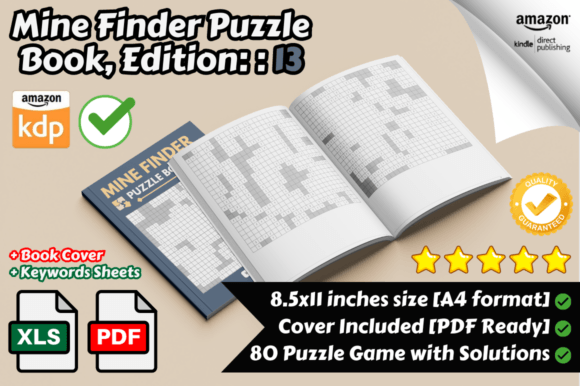
Mine Finder Puzzle Book for KDP Part 19
Creating a puzzle book that actually sells on Amazon KDP often comes down to two things: the quality of the puzzles and the strength of the design. Mine Finder Puzzle Book for KDP Part 19 hands you both of those on a silver platter. It’s a ready-made interior and cover bundle built specifically for self-publishers who want to skip the tedious layout work and get straight to publishing a logic puzzle that has a dedicated, almost cult-like following. The mine finder concept—think pen-and-paper Minesweeper—has a timeless appeal, and this package wraps it in a presentation that feels cohesive, clean, and unexpectedly polished for a low-content or medium-content book.
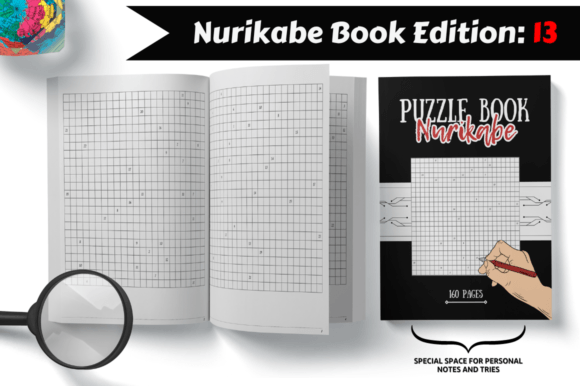
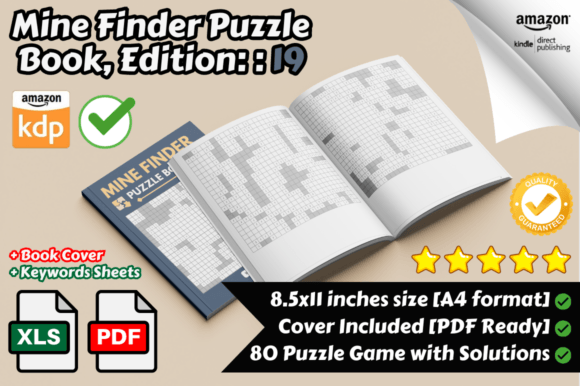
If you’ve ever spent hours tweaking margins, aligning grid cells, or hunting for a cover font that doesn’t scream “amateur hour,” you’ll appreciate what’s here. The PDF interior spans 160 pages in an 8.5×11 inch format, with 80 puzzle pages facing 80 solution pages. That’s a substantial, no-filler structure that conveys real value to a buyer. It’s the kind of layout that works equally well for a serious puzzle enthusiast picking up a copy at a bookstore (yes, KDP paperbacks can feel that good) or someone grabbing a digital printable to do on a tablet. The balance between challenge and accessibility is carefully maintained, and that’s no accident. The puzzle grid sizes and clue placements create a smooth difficulty curve, which keeps solvers engaged rather than frustrated.
Design Personality That Speaks Directly to Puzzle Lovers
The visual language of Mine Finder Puzzle Book for KDP Part 19 is deliberate and market-aware. While we often hear about “brand identity” in relation to logos and websites, it applies just as strongly to a printed puzzle book. The cover design here uses a bold display font that leans into a blocky, almost tactical aesthetic—reminiscent of military stencils or retro computer interfaces. This isn’t a fragile script font or a delicate serif font; it’s a sturdy, assertive typeface that immediately communicates logic, precision, and a bit of adventure. Paired with a darker color palette and subtle grid overlays, the cover gives off a vibe that’s equal parts classic strategy game and modern brain-training challenge.
Inside, the typography takes a smarter turn. The puzzle grids themselves demand absolute clarity, so the interior PDF relies on a legible sans serif font for numbers and any instructional text. This isn’t the place for a quirky handwritten font or overly decorative letterforms. Readability under varying print conditions is paramount. The solution pages mirror this clean aesthetic, making it easy for users to check their answers without squinting. As a design asset, the finished book feels professionally typeset, not like something knocked together in a word processor. That’s a critical distinction for self-publishers who want repeat buyers—customers notice when a puzzle book is easy on the eyes and finger-tip friendly during hours of solving.
Where This Puzzle Book Shines Across Creative and Commercial Projects
You might think a puzzle book is a puzzle book, but the context in which you use Mine Finder Puzzle Book for KDP Part 19 can vary widely. Obviously, the most direct application is publishing it as a physical or Kindle Direct Publishing paperback to sell on Amazon. The included PDF cover file is already sized and formatted for KDP’s requirements, so you avoid the painful trial-and-error of spine width calculations. But that’s just the starting point.
For marketers and content creators, a polished puzzle book like this becomes a lead magnet or a newsletter freebie. You could brand a few pages, swap in your own logo (yes, the PDF can be edited with the right tools, depending on your license), and use it to grow an email list. Bloggers who write about brain health or productivity can embed a handful of puzzles as a reader engagement tool. Even small business owners in the activity book niche can use the interior as a design template to create their own mine finder series, learning from the layout and typography decisions already baked in. The commercial font choices on the cover are robust enough that you could mirror a similar style across social media graphics if you promote the book on Instagram or TikTok—replicating that stencil-like display typeface in your posts creates a seamless brand experience from ad to Amazon listing.
Readability, Hierarchy, and the Silent Salesmanship of Good Typography
One of the most underrated aspects of a low-content book like this is how modern typography can influence a buyer’s perception before they even attempt a single puzzle. The cover sets the emotional tone: a confident, slightly rugged display font promises a challenge, not a casual word search. The interior then fulfills that promise with practical, high-contrast sans serif fonts for numbers and a clear grid structure that respects visual hierarchy. The puzzle titles might use a complementary sans serif or even a very subdued slab serif to separate sections, but nothing fights for attention.
That kind of font pairing isn’t just an aesthetic exercise—it directly affects usability. A puzzle book with poor hierarchy becomes a chore. If solution numbers are too small, or if the grid lines bleed into the background at certain print densities, the customer experience suffers. Here, the design choices reflect an understanding of how people actually use puzzle books: often in dim lighting, sometimes on a coffee table, sometimes in a busy waiting room. The typography works to support rapid scanning and low cognitive load, which keeps solvers in a flow state. That flow state is what turns a one-time purchase into a fan who seeks out your next book. From a brand strategy perspective, this attention to detail signals professionalism and a respect for the audience’s time.
Making the Most of the Included Marketing and Design Assets
A standout feature that moves Mine Finder Puzzle Book for KDP Part 19 beyond a simple PDF template is the Excel spreadsheet packed with targeted keywords. For anyone serious about selling on Amazon, that spreadsheet is worth its weight in royalties. It transforms the publishing process from guesswork into a data-informed strategy. You can pluck high-volume, low-competition search terms and weave them into your book’s title, subtitle, and description—terms like “logic puzzles for adults,” “minesweeper book,” or “number puzzle games.” The visual design of the book is excellent, but without discoverability, even the most beautiful cover gathers dust. The keyword list bridges that gap, giving marketers and publishers a clear path to a wider audience.
Beyond keywords, think of the entire package as a set of design assets that you can adapt. The PDF cover file uses a specific typeface combination that you might want to match if you create an A+ Content page on Amazon or a promotional flyer. If you’re a designer creating puzzle books for clients, you can study the interior layout as a model for other grid-based puzzle styles. The 8.5×11 inch format is generous without being unwieldy, and the symmetrical puzzle-to-solution ratio is a smart page economy that you can replicate. Observing how the solution pages mirror the puzzle grids—right down to the font size for numbers—teaches you practical lessons about consistency in editorial design that apply far beyond this one product.
Practical Considerations for Self-Publishers and Designers
Before you upload to KDP, spend a few minutes evaluating the project fit for your audience. If you’re marketing to seniors looking for brain training, you might want to enlarge the text slightly or offer a large print variant (you’d need to make those adjustments yourself, as the provided PDF is a fixed design). The current sans serif font sizes are well-suited for a general adult audience, but testing print samples is non-negotiable. Print the interior pages at home and hand them to a friend who actually enjoys logic puzzles; watch their eyes and fingers. If they squint at the numbers or misread a clue, you’ll know where to fine-tune.
Licensing wisdom is equally important. The product description implies you can publish the book on KDP, but always check the specific commercial terms. Typically, you’re granted a right to publish the finished book as your own, but you may not resell the raw PDF files as a design template. This distinction matters if you’re a creative entrepreneur who likes to repurpose assets. If you’re uncertain, reach out to the creator. For most self-publishers, the standard KDP publication license is more than enough. And if you do plan to use the cover font on other products, verify whether it’s an open-source or licensed font; some display fonts require an additional commercial license for use on a book cover, though many in the puzzle niche are crafted from freely available typefaces.
Another angle worth exploring is how to extend the visual language of this book into a series. The bold stencil-like cover font could become a recognizable hallmark for your own “Mine Finder” brand. You could publish a Part 1, Part 2, and so on, using the same typographic system but varying the color palette. Brand identity isn’t just for big companies; a consistent cover aesthetic across multiple puzzle books helps build trust with Amazon shoppers who scan thumbnails quickly. The provided cover file might show you exactly how to structure that aesthetic, making it easier to design sequels yourself using a similar display font and layout hierarchy.
Why Nuanced Design Choices Matter Even in a Simple Puzzle Book
It’s tempting to think that a mine finder puzzle book doesn’t need artful typography because the content is just grids and numbers. But that underestimates how people buy. A buyer flipping through the “Look Inside” preview on Amazon is unconsciously rating the book’s quality. Crisp, evenly spaced numbers, consistent grid line weights, and a solution section that feels immediately scannable all contribute to a sense of authority. When those elements align, the book feels like a premium product even though it’s essentially a collection of logic puzzles. That perceived value is what allows you to price slightly higher and still win the Buy Box over lower-quality alternatives.
Mine Finder Puzzle Book for KDP Part 19 demonstrates that you don’t need to be a professional designer to publish a visually competent puzzle book—but you do need to recognize good design when you see it and understand its impact on the customer. The included PDFs give you a head start that many self-publishers spend weeks trying to replicate. From the confident cover typography to the sensible interior layout, the choices made here reflect a pragmatic understanding of print-on-demand constraints and human ergonomics. If you approach it as more than just a file to upload—seeing it as a case study in effective puzzle book design—you’ll walk away with insights you can apply to every subsequent project.