Unlocking the World of Mine Finder Puzzles: Logic, Creativity, and the Art of Self-Publishing
Have you ever felt the quiet thrill of cracking a code, the gentle rush of connecting scattered clues into a clear solution? That is the heart of the mine finder puzzle experience. In an era dominated by endless screen time and digital noise, these paper-based logic challenges are making a remarkable comeback. They offer something uniquely valuable: a moment of focused calm, a workout for the brain, and a tangible sense of accomplishment. Whether you are a seasoned puzzler, a curious beginner, an educator, or an aspiring self-publisher, understanding the appeal and potential of mine finder puzzles opens a door to a world where logic meets creativity. This article explores everything from the fundamentals of the game to its surprising role in modern business, cognitive health, and the booming market of print-on-demand puzzle books.
What Exactly Is a Mine Finder Puzzle?
At its core, a mine finder puzzle is a logic grid game. Most people recognize its digital ancestor: the classic computer game Minesweeper, which came pre-installed on Windows operating systems for decades. The premise is elegantly simple. You are presented with a grid of hidden cells. Some cells contain harmless empty spaces, while others hide explosive "mines." Your task is to uncover every safe cell without detonating a mine. But here is the twist—you are not working blind. When you click a safe cell, a number appears. That number tells you exactly how many mines are hidden in the eight cells directly adjacent to it. Using deduction, you gradually map out the hidden dangers and clear the board.
In printed puzzle books, the concept translates beautifully to pen and paper. Instead of clicking, you fill in cells, mark suspect tiles, and use logic to work through the grid. The experience is tactile and deliberate. You can pause, erase, and think without the pressure of a ticking timer. A finished puzzle reveals a satisfying pattern, and the journey to get there is a pure exercise in reason. The Mine Finder Puzzle Book takes this beloved format and expands it into a rich collection of challenges, blending classic mine detection with other brainteasers like mazes and Sudoku to keep every page fresh and engaging.
The Cognitive Power of Logic Puzzles
Why should anyone spend time solving puzzles like these? The answer goes far deeper than simple entertainment. Engaging regularly with logic puzzles triggers a cascade of cognitive benefits that extend into daily life and overall mental wellness.
- Sharper Problem-Solving Skills: Each puzzle is a micro-problem that requires you to analyze incomplete information, form hypotheses, and test them logically. This process strengthens the brain's executive functions, making you a more agile thinker at work and at home.
- Improved Concentration: In a world of constant notifications and interruptions, sitting down with a puzzle book compels sustained focus. The practice of shutting out distractions and following a logical thread to its conclusion can measurably improve your attention span over time.
- Memory Support: Deductive reasoning naturally exercises working memory. You must hold clues in your mind while scanning for patterns, a gentle yet effective way to keep your short-term memory sharp.
- Stress Reduction and Mindfulness: Paradoxically, intense focus can be deeply relaxing. When you are absorbed in a mine finder puzzle, anxious thoughts about the future or regrets about the past tend to fade. The task grounds you in the present, offering a form of active mindfulness that feels productive rather than idle.
Health professionals and lifelong learning advocates increasingly recommend such brain games as part of a holistic approach to cognitive longevity. While no single activity is a magic bullet against age-related decline, a lifestyle enriched with logical challenges, social connection, and physical activity contributes to a cognitive reserve that supports brain health for years to come.
The Renaissance of Printed Puzzle Books in a Digital Age
It might seem counterintuitive. Why would anyone buy a printed puzzle book when thousands of free puzzle apps exist? Yet the data and cultural trends tell a different story. The global puzzle book market is thriving, and several factors explain the shift back to paper.
First, screen fatigue is real. Remote work, social media, and streaming have driven average daily screen time to unprecedented levels. A paper puzzle book offers a literal and psychological break. There are no blue lights, no pop-up ads, no battery indicators demanding your attention. Just paper, pen, and your thoughts.
Second, the tactile satisfaction of writing cannot be replicated digitally. Circling a mine, shading a safe cell, and physically crossing off possibilities engages fine motor skills and creates a sensory memory of the solution process. For many, this makes the experience more enjoyable and memorable than tapping a glass screen.
Third, puzzle books are inherently shareable and giftable. You can pass a book to a friend, solve a page together at a coffee shop, or wrap it as a thoughtful present for a relative who needs a relaxing hobby. Digital apps rarely carry the same sentimental weight.
A Closer Look at the Mine Finder Puzzle Book for KDP
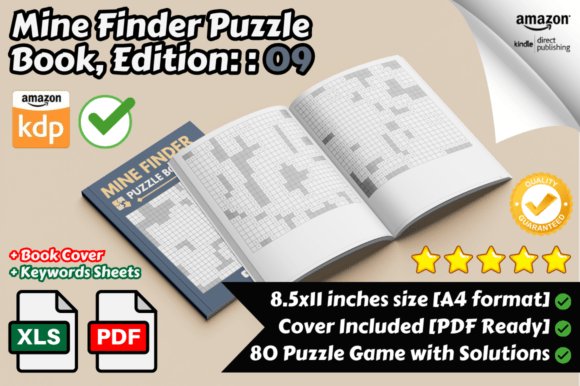
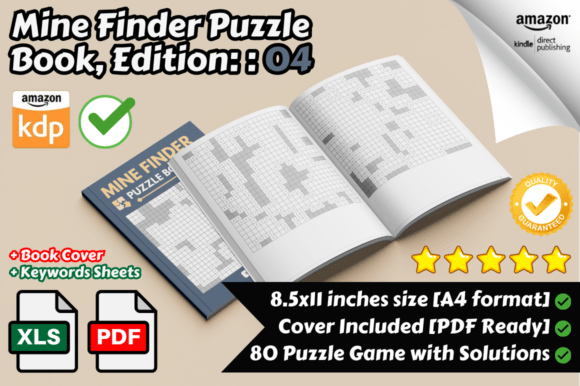
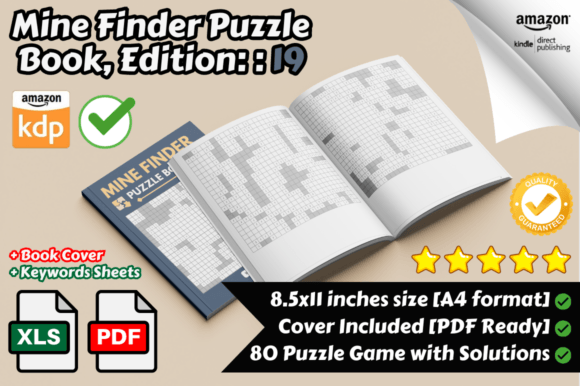
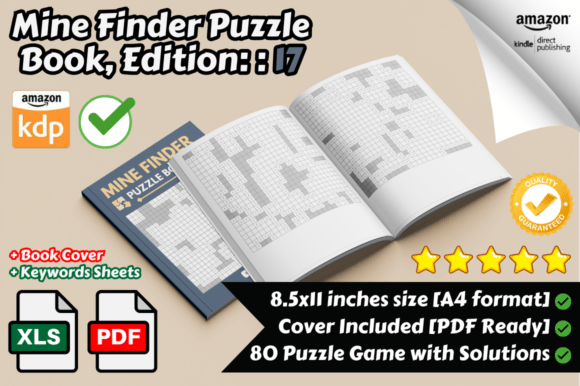
For those who want to dive in, the Mine Finder Puzzle Book represents a thoughtfully assembled entry into this genre. Designed as a complete package for both puzzle lovers and self-publishers, it contains 160 pages in a spacious 8.5x11-inch format. Half of those pages—80 in total—are dedicated to puzzles, while the remaining 80 pages provide clear, well-organized solutions. This balance ensures that you never feel stranded. A quick glance at the solution section can offer a nudge in the right direction or confirm a hard-won victory.
The variety inside is especially noteworthy. While the core mine finder logic puzzles take center stage, the book also weaves in other beloved brainteasers. You might find a cleverly designed maze one day, then a satisfying Sudoku variant the next. This mix keeps the content from feeling monotonous and exercises different mental muscles, making it an ideal choice for older adults wanting diverse cognitive stimulation or for families looking to share screen-free activity time.
What Makes a Great Puzzle Book Interior?
The quality of a puzzle book lives and dies by its interior design. Clean layout, generous margins for notes, and a font that is easy on the eyes are non-negotiable. The PDF interior file provided with this book has been meticulously crafted to meet professional standards. Each puzzle sits clearly on the page with plenty of white space, preventing the cluttered, cramped feeling that plagues some bargain puzzle collections. For self-publishers using Amazon KDP or a similar platform, this professional-grade interior translates directly to higher customer satisfaction ratings and fewer returns.
The Power of Keywords for Discoverability
One unique aspect of this product is its commitment to helping aspiring authors succeed. Beyond the ready-to-publish interior and the professionally designed PDF cover file, the package includes Excel spreadsheets filled with powerful keywords. In the world of online self-publishing, keywords are the bridge between your book and its audience. A reader might type "mindfulness puzzle book for seniors" or "hard mine sweeper logic grid" into a search bar. The right keyword strategy ensures your book appears in those results. These spreadsheets act as a launchpad, removing the guesswork from Amazon KDP optimization and helping you reach readers actively searching for exactly what you offer.
Self-Publishing Your Own Puzzle Book: A Creative and Business Opportunity
The rise of print-on-demand platforms has democratized book publishing in remarkable ways. A decade ago, producing a polished puzzle book required significant upfront investment in printing, storage, and distribution. Today, with a service like KDP, you can upload a PDF, launch a product page, and begin selling to a global audience within days. There is no inventory to manage, no shipping to handle, and no financial risk beyond your time and creativity.
Puzzle books sit in a sweet spot on these platforms. They cater to a passionate and repeat-purchasing niche. Customers who enjoy one Sudoku book often buy three more. The same holds true for mine finder puzzles. By offering a well-designed, thoughtfully curated product, you can build a steady stream of passive income. The Mine Finder Puzzle Book package accelerates this journey dramatically. Instead of wrestling with design software or researching keywords for weeks, you receive a production-ready asset that reflects current market trends. It is both a learning tool and a business shortcut, perfect for creative entrepreneurs, teachers developing classroom resources, or anyone exploring side-income ideas.
Who Can Benefit from Mine Finder Puzzles?
The appeal of these puzzles crosses demographic lines in surprising ways.
- Students and Young Learners: Logic puzzles sharpen deductive reasoning and patience—skills that translate directly to math, science, and coding. They provide a fun supplement to formal education that feels like play.
- Working Professionals: Using a puzzle during a lunch break or commute (if traveling by train) offers a structured way to mentally reset. It can clear the mental clutter left from a morning of meetings and help you return to tasks with renewed clarity.
- Seniors and Retirees: Cognitive engagement is a pillar of healthy aging. Mine finder puzzles offer a gentle, adaptable challenge. The large 8.5x11-inch format used in this book ensures that the grids and numbers are accessible for readers with visual comfort needs.
- Therapists and Caregivers: These puzzles can find a place in therapeutic settings, such as occupational therapy or memory care programs, where structured cognitive activities support patient goals.
Common Misunderstandings About Mine Finder Puzzles
Despite their straightforward rules, a few misconceptions keep people from trying these puzzles. Let’s clear them up.
"It's just luck, right?" This is the most persistent myth. While the very first tap in a digital Minesweeper game carries a small element of luck, every subsequent move relies entirely on logic. In a well-designed printed puzzle, the initial clues are given, meaning luck is essentially removed from the equation. You can solve every single puzzle through deduction alone.
"I'm not a math person, so I can't do logic puzzles." Mine finder puzzles use numbers, but they are not about mathematical calculation. The numbers are simply labels indicating quantity—like counting apples. The real skill is spatial reasoning and logical sequencing, which are distinct from arithmetic ability and can be developed with practice by nearly anyone.
"Printed puzzles are too static compared to apps." On the contrary, the static nature of a printed page is its greatest asset. It forces you to externalize your thinking using marks, crosses, and shading. This visual trail enhances the learning process and creates a personal record of your thought journey, something a dynamic screen rarely captures in the same way.
Conclusion: Embrace the Puzzle Adventure
The Mine Finder Puzzle Book stands as more than a collection of games. It is an invitation to slow down, engage deeply, and discover the quiet joy of logical mastery. Whether you are seeking a mental break from digital overload, a meaningful gift for a loved one, or a turnkey product to launch on a self-publishing platform, this resource meets a genuine modern need. It blends proven cognitive benefits with the timeless pleasure of puzzle-solving, all wrapped in a professional package designed for real-world use.
In a culture that often prizes speed and multitasking, choosing to sit with a single challenge and work it through to the end is a radical act of self-care. It sharpens the mind, soothes the spirit, and reminds us that some of the most satisfying journeys happen not on a screen, but with a pen resting quietly on paper. So take a deep breath, open to the first puzzle, and let the logic lead you somewhere wonderful.