The Racquetball Playbook for KDP: A Strategic Asset for Low-Content Publishers
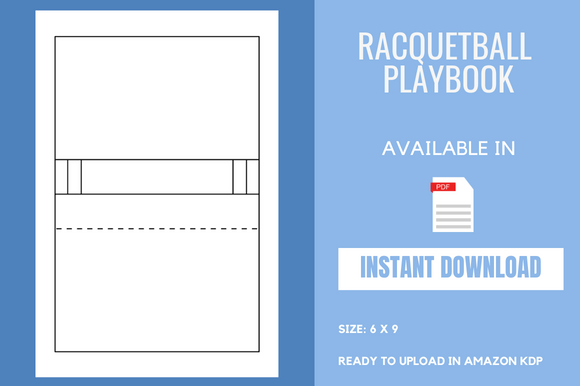
Entering the low-content publishing space often feels like stepping onto a court without a game plan. You know the opportunity is real, but the path to consistent royalties can remain elusive. This is where a tool like the Racquetball Playbook - KDP Interior shifts from a simple template into a strategic decision-making asset. It isn’t just a PDF; it’s a pre-structured, 110-page interior sized at a versatile 6x9 inches with bleed, ready for upload. What makes it practical isn’t the page count itself, but the thinking it does for you—eliminating repetitive design work so you can focus on positioning, branding, and market fit.
Why a Ready-Made Interior Changes the Equation
Many creators over-invest in the wrong places early on. Designing pages, tweaking margins, and second-guessing bleed settings consume hours that could be spent researching niches or refining book descriptions. The Racquetball Playbook KDP Interior solves a specific operational problem: it delivers a production-ready file that meets Amazon’s technical requirements without guesswork. This matters because technical rejections delay launches and erode momentum. When you hold a completed interior in hand, the question shifts from “can I make this work?” to “how should I position this to reach the right audience?”
For entrepreneurs and small business owners testing the low-content model, this pre-built foundation reduces the cognitive load. Instead of learning interior design software, you can direct your energy toward strategic choices—cover design, keyword categories, and pricing psychology. The interior handles the functional purpose of the book, while your decisions shape its perceived value.
Strategic Groundwork Before You Upload
Using any template without clear goals can lead to a generic product that blends into a crowded marketplace. Before you touch the file, ask yourself what gap this playbook fills. Is it a practice log for club-level players, a coaching journal for instructors, a gift for racquetball enthusiasts, or a novelty item for a niche community? Each answer pulls your marketing in a different direction. A playbook aimed at a competitive player will need a cover and description that signal performance, while a version targeting hobbyists might lean into fun and motivation. The interior remains the same, but the context you build around it determines how it’s received.
Consider writing a short positioning statement. For example: “This book helps serious racquetball players track practice drills, game strategies, and progress over a 110-page undated format.” Or perhaps: “A gift-ready playbook that invites weekend warriors to sketch plays and log match highlights without rigid structure.” That clarity guides everything from category selection to the tone of your A+ Content.
How the Product Details Support Practical Decision-Making
The specifications of this interior are worth unpacking because they influence how you sell and who you sell to. The 6x9 trim size is widely accepted and fits comfortably on bookshelves, in gym bags, and alongside other sports journals. The bleed setting means you can design covers that extend to the edge, creating a professional finish that doesn’t scream “print-on-demand template.” These details aren’t just technical; they shape the user’s first impression. A book that looks and feels like a real, published product converts browsers into buyers far more effectively than one that appears hastily assembled.
With 110 pages, the playbook offers enough room for extended use without becoming daunting. That length works well for undated journals, allowing users to dip in and out over a season. From a strategic standpoint, it’s also a sweet spot for pricing. You can often price a 110-page low-content book higher than a 50-page version while keeping the perceived value proportional. Test different price points early, but let the page count support a reasonable premium if your positioning is strong.
Branding Beyond the Blank Page
A common mistake is to treat the Racquetball Playbook - KDP Interior as the entire product. It’s not; it’s the sturdy canvas. Your brand comes from the cover, the book title, the subtitle, the series name if you expand, and the author page. Take the time to develop a consistent visual identity. Even if you’re not a designer, simple principles—cohesive fonts, a recognizable logo, a color palette tied to racquetball culture (think court blue, ball red, dynamic white)—can make your book stand out in search results.
Think about adding a short introduction page before the playbook pages begin. This is often overlooked in low-content books, but it’s a powerful space to welcome the user, explain how to get the most from the playbook, and invite them to connect with your brand through a website or social media handle. Such small touches increase perceived value and can turn a one-time sale into a repeat customer.
When to Use a Ready-Made Interior—and When to Wait
The Racquetball Playbook KDP Interior excels when speed to market matters. If you’ve identified a seasonal trend (a major racquetball tournament, the start of a league season), you can have a polished book listed within days rather than weeks. It also works well for testing a niche. Instead of commissioning custom interiors for five different sports playbooks, you could adapt this one by overlaying slightly different branding and see which concept gains traction first.
However, this interior isn’t a universal solution. If your goal is to create a highly specialized coaching manual with extensive instructional text, a blank playbook structure may not serve. In that case, you’d be better off combining custom content with a more tailored layout. Use this interior when the user’s primary activity is writing, sketching, or logging—not when they need densely packed guidance. Deciding when not to use it is just as strategic as deciding when to go ahead.
Structuring Your Book Portfolio Around a Core Asset
A single book rarely builds a sustainable income stream by itself. The Racquetball Playbook - KDP Interior can anchor a series. Think horizontally: a racquetball drill log, a match journal, a tournament planner, a coach’s clipboard. Each uses the same core design but targets a different sub-niche. This approach lowers your per-book creation cost and creates a brand presence that Amazon’s algorithm may reward over time. When customers see multiple well-branded books from the same author, trust builds and so does the likelihood of multi-book purchases.
Plan your series intentionally. Before publishing the first book, sketch out three to five related titles. This forward-thinking lets you design covers that feel like a family. Later, you can bundle them on your own platform or use Amazon’s series linking. The interior remains the workhorse; your product strategy turns it into a scalable catalog.
Practical Steps for Launch and Iteration
- Validate your category: Search for similar racquetball playbooks. If the top results have poorly designed covers or sparse reviews, that signals opportunity. If the space is saturated, sharpen your angle.
- Test pricing in small increments: Start slightly higher than average and lower if needed. The 110-page count and bleed-ready professionalism justify testing above the median.
- Gather early feedback: Even a few organic reviews can highlight how people actually use the book. If they mention wanting more room for notes in a certain section, you can adjust a future update.
- Monitor keyword performance: The terms “racquetball playbook,” “racquetball journal,” and “sports training log” might behave differently. Adjust your backend keywords based on what drives clicks.
- Refresh seasonally: A new cover edition tied to a sports event or a fresh interior page layout can restart interest without starting from zero.
The Risk of Using Templates Without Strategic Context
There’s a quiet risk in plug-and-play interiors: they can lull you into a passive mindset. Simply uploading the file and forgetting it rarely leads to meaningful royalties. The market is too smart. A low-effort listing with a keyword-stuffed title and a mismatched cover will get lost. Similarly, if you treat the Racquetball Playbook - KDP Interior as a one-time transaction, you miss the chance to build a recurring asset. The interior solves the production problem, but it doesn’t replace the ongoing work of optimization, customer understanding, and brand refinement.
Avoid the trap of scaling without focus. Publishing ten unrelated low-content books with the same interior concept but different topics splits your attention and confuses your audience. Stick with a theme long enough to learn what works. The playbook’s real value emerges when you use it to deepen your knowledge of a specific market segment, not when you spread yourself thin.
Long-Term Value and the Compound Effect
One well-executed book can generate royalties for years. When that book is part of a thoughtful plan, those royalties become predictable. The Racquetball Playbook KDP Interior gives you a repeatable framework. As you gain confidence, you might hire a designer to modify the file slightly—adding a branded footer or a unique page mark—so your version evolves while the core remains efficient. Over time, your library of playbooks becomes a moat. Competitors can buy the same interior, but they can’t replicate the customer relationships, reviews, and brand recognition you’ve built.
Think of this interior as a strategic enabler: it removes the heavy lifting of preparation so you can practice the real craft of publishing—understanding what buyers need and delivering it with clarity. Whether you’re a freelancer looking for a side income stream, a marketer exploring KDP, or a small business owner wanting to test passive revenue, the tool itself is neutral. Your strategic intent turns it into a profit-making asset or just another file on a hard drive. Use it intentionally, measure results, and let the playbook play its part in a larger business narrative.