Streamline Your Content with a Blog Planner Canva Template
Every successful content creator knows that consistency beats inspiration every time. Yet staying organized across multiple platforms, tracking ideas, and maintaining a cohesive brand identity can feel like juggling too many balls at once. A Blog Planner Canva Template changes that equation entirely, giving you a professionally designed framework that transforms scattered notes into a polished editorial workflow. For graphic designers, marketers, and business owners who care about visual design and professional presentation, this resource bridges the gap between creative ambition and daily execution.
Why Visual Planning Matters in Modern Content Creation
The way you plan directly influences the quality of what you publish. When your planning tools reflect strong visual hierarchy and intentional typography, the planning process itself becomes more engaging. A well-crafted planner does more than hold information — it guides your eye, reduces cognitive load, and subtly reinforces the design principles you want to carry into your published work. For creators who work across social media graphics, editorial design, and digital marketing, using planning tools that match your aesthetic standards keeps you immersed in a creative mindset.
Think about the difference between scribbling notes on scrap paper versus opening a thoughtfully laid-out template where every section has breathing room, consistent color palette application, and clear labeling. That shift in experience matters. It signals to your brain that the work ahead deserves care and attention, which directly impacts the design inspiration you bring to each project.
What the Complete Planner System Includes
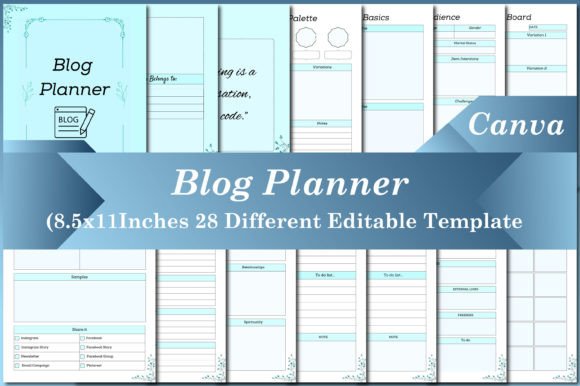
A comprehensive Blog Planner Canva Template goes far beyond a simple calendar. The most effective versions include dedicated sections that address every stage of the content lifecycle, from raw idea generation to final performance review. Here is what you can expect from a full-featured planner built for serious creators:
- Brainstorming and Vision Board — Capture creative sparks and mood references before they fade, giving your creative projects a strong conceptual foundation
- Brand Basics and Brand Board — Document your brand identity elements including logo usage, typography pairings, and core messaging so every piece of content stays aligned
- Color Palette and My Audience — Keep your signature colors and audience personas visible, ensuring your visual communication remains targeted and consistent
- Blog Post Ideas and Content Schedule — Move ideas through a structured pipeline, from rough concept to scheduled publication date
- Daily Planner and Post Planner — Break big goals into manageable daily actions with dedicated space for individual post details
- Social Media Tracker and Posting Schedule — Monitor performance across platforms while maintaining a clear view of what publishes when
- Pinterest Boards Planner — Organize your pin strategy with intention, treating Pinterest as a visual search engine that rewards consistency
- Goal Tracker, Goal Review, and Monthly Assessment — Set measurable targets and regularly evaluate progress, a practice borrowed from professional design workflow methodologies
- Annual Overview and Acknowledge Your Accomplishment — Zoom out to see the big picture and deliberately celebrate wins, which fuels long-term motivation
- Checklist and My Family Changing — Address the personal logistics that impact your creative availability, acknowledging that life and work are intertwined
The Designer's Approach to Planner Architecture
From a pure graphic design standpoint, the structure of this planner reflects principles used in premium UI design and print design. Each page operates like a well-composed layout where information density is balanced with white space. The typography choices guide readability, the color palette creates visual continuity across sections, and the overall grid system ensures that even handwritten notes feel anchored within a professional framework. These are not accidental details — they are deliberate design trends applied to productivity tools, making the planner itself an example of modern aesthetics in action.
Practical Applications Across Creative Workflows
While the primary use case is blog management, the applications extend into nearly every corner of visual content creation. The Branding and logo design sections serve as a living style guide for freelance designers managing multiple client identities. The social media graphics planning pages help marketing teams align their advertising campaigns with editorial calendars. For those focused on packaging design or merchandise, the brainstorming and vision board templates provide a structured starting point for conceptual work.
Even web design and UX design professionals benefit from the goal-setting and assessment frameworks. Mapping user research findings onto the audience profile pages, tracking iteration cycles through the content schedule, and reviewing project milestones with the monthly assessment tool create a rhythm of intentional progress. In digital products and creative assets development, this systematic approach reduces the friction between ideation and delivery.
Integration with Brand Systems
One of the most valuable aspects of an editable Canva-based planner is how easily it absorbs your existing brand identity. You can swap in your color palette, adjust typography to match your brand guidelines, and incorporate logo design elements directly into the pages. This compatibility ensures that your planning documents feel like a natural extension of your professional presentation materials rather than a disconnected administrative tool. When clients or collaborators see your planning system, it reinforces the same visual hierarchy and design language they encounter in your published work.
Technical Specifications That Support Professional Output
For creators who intend to produce physical copies or publish through print-on-demand platforms, the technical details matter enormously. The planner is formatted at 8.5 x 11 inches with no bleed, which simplifies the print design setup and ensures compatibility with standard home printers and commercial services alike. The files are prepared in CMYK color at 300 DPI, meeting the requirements for Amazon KDP and other major platforms. Across 28 pages, every element has been tested for print clarity and color accuracy. You receive both a ready-to-upload PDF and an editable Canva link, giving you control over customization while maintaining a production-ready backup.
This dual delivery approach respects different design workflow preferences. Some users will open the Canva link, personalize every detail, and export their unique version. Others will appreciate having the polished PDF immediately available for printing or uploading, trusting that the foundational design work has already been done to professional standards.
Making Intentional Design Choices
Selecting the right planning tools is, at its core, a design decision. You are choosing the environment where your ideas will take shape, where your design inspiration will be documented, and where your progress will be measured. A planner that embodies strong visual design principles becomes a daily touchpoint for creative excellence. It quietly reinforces the standards you apply to client work, personal projects, and everything in between.
The connection between organized planning and user experience is direct and undeniable. When your content pipeline runs smoothly, your audience receives consistent, thoughtful material that reflects your brand identity without gaps or rushed quality. Every checklist completed, every goal reviewed, and every accomplishment acknowledged feeds into a cycle of improvement that compounds over weeks and months. The Blog Planner Canva Template is not merely a collection of pages — it is the visual infrastructure that supports sustainable creative output and meaningful audience engagement.